

Can a dentist diagnose sleep apnea?
A dentist can screen for risk and recognize oral or airway findings, but obstructive sleep apnea is medically diagnosed, typically using an appropriate sleep evaluation.
Who may be a candidate for an oral appliance?
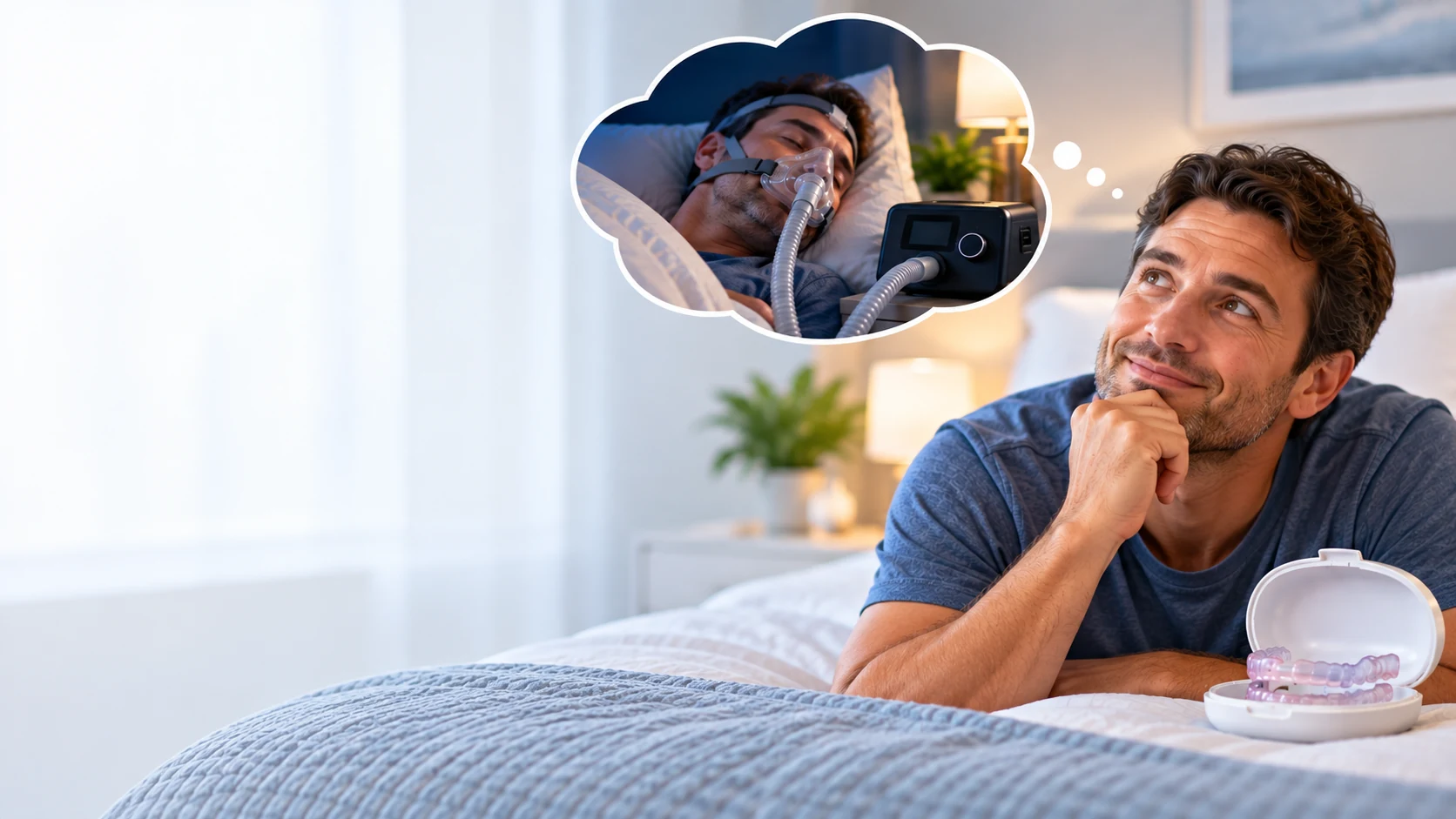
Oral appliance therapy can be appropriate for selected adults with diagnosed OSA, often based on severity, anatomy, preferences and medical recommendations. Bright Smiles provides mandibular advancement devices (MADs) and Vivos DNA, mRNA, mmRNA, CARE and Guide appliances; device selection is individualized.

Is an oral appliance the same as a snore guard?
No. Oral-appliance therapy for OSA is prescribed, fitted and monitored as treatment for a diagnosed condition. Depending on the clinical plan, Bright Smiles may use a mandibular advancement device (MAD) or an appropriate Vivos appliance rather than a generic snore guard.

How do we know whether it is working?
Symptoms matter, but treatment effectiveness should be confirmed through appropriate medical follow-up and, when recommended, objective sleep testing with the appliance in use.
SLEEP APNEA IS MORE THAN SNORING
The treatment goal is keeping the airway open enough to support healthier sleep and breathing.
In obstructive sleep apnea, the upper airway repeatedly narrows or collapses during sleep. That can fragment sleep and lower oxygen levels even when the person does not fully wake up. Loud snoring, witnessed pauses, gasping and daytime sleepiness are common warning signs, but symptoms alone do not determine severity.
Dental treatment begins with the medical diagnosis and then focuses on whether a custom oral appliance is appropriate for the individual patient.
WHEN ORAL APPLIANCE THERAPY MAY FIT
Factors considered when oral-appliance therapy is discussed
Diagnosed obstructive sleep apnea
The severity and sleep-study findings help guide whether an oral appliance is a reasonable option.
Preference for a non-CPAP option
Some patients prefer an oral appliance after discussing alternatives with their medical sleep provider.
Difficulty tolerating CPAP
For selected patients who cannot use CPAP consistently, an oral appliance may be considered within the medical treatment plan.
Travel or lifestyle considerations
A compact removable appliance can be easier to travel with, but convenience does not replace effectiveness.
Adequate dental support
Teeth, gums, jaw joints and restorative work must be evaluated before an appliance that advances the lower jaw is prescribed.
Ability to complete follow-up
Appliance adjustment, dental monitoring and appropriate sleep follow-up are part of treatment—not optional extras.
A quieter bedroom is not enough evidence that sleep apnea is controlled.
Snoring may improve before the airway problem is fully treated. Objective medical follow-up is important when oral appliance therapy is used for diagnosed OSA.
DENTAL EVALUATION FOR AN ORAL APPLIANCE
What we assess after or alongside the medical diagnosis
We review the sleep diagnosis and treatment recommendation, dental condition, periodontal support, jaw-joint history, range of motion, bite, restorative work and whether the patient can comfortably advance the lower jaw. Digital records are then used to design a custom device when appropriate.
Reasons the plan may need modification or another option
- Untreated dental disease or unstable periodontal health
- Insufficient teeth or support for the intended appliance design
- Significant TMJ symptoms that worsen with mandibular advancement
- Severe gagging or inability to tolerate a removable appliance
- A medical sleep plan that recommends a different primary therapy
FROM DIAGNOSIS TO FOLLOW-UP
A coordinated oral-appliance pathway
01 — Medical sleep diagnosis
OSA is established through the appropriate medical sleep-evaluation process.
02 — Dental candidacy exam
We evaluate teeth, gums, jaw joints, bite and appliance suitability.
03 — Custom appliance & titration
The device is fitted and advanced gradually to balance airway benefit, comfort and jaw tolerance.
04 — Medical effectiveness check
The sleep physician or appropriate medical provider confirms treatment response, often with follow-up testing when indicated.
LIVING WITH AN ORAL APPLIANCE
Daily care and long-term monitoring
Wear it every night as prescribed
An oral appliance only works during the nights it is worn.
Clean it and protect it from heat
Follow appliance-specific cleaning instructions and avoid hot water that can distort material.
Monitor jaw and bite changes
Morning tightness, tooth movement or bite changes can occur and should be discussed rather than ignored.
Keep medical follow-up
Weight, medications, anatomy and sleep apnea severity can change over time, so long-term reassessment matters.
INSURANCE & FINANCIAL PLANNING
Know the plan before treatment begins.
We accept your insurance and will help you maximize your benefits. Coverage varies by plan, diagnosis and procedure. Our team can review expected fees, available benefits and payment or financing options before treatment begins.
Treatment recommendations are based on clinical need, not on whether a particular service is covered.
CARE CLOSE TO HOME
Choose the Bright Smiles location that works best for you.
Specific provider, technology and appointment availability can be confirmed when you schedule.
Lawrenceville
845 Scenic Hwy S, Suite 300, Lawrenceville, GA 30046
Dawsonville
78 Dawson Village Way N, Suite 170, Dawsonville, GA 30534
START WITH AN EVALUATION
Talk with Bright Smiles about sleep apnea treatment for adults.
Use the location links to schedule directly. The appropriate treatment is confirmed only after clinical evaluation.
Submitting an online booking request starts the scheduling process; treatment recommendations are made after evaluation.
FREQUENTLY ASKED QUESTIONS
Sleep Apnea Treatment for Adults questions patients ask
The right treatment depends on the individual diagnosis and clinical findings.
What is obstructive sleep apnea?
It is a sleep-related breathing disorder in which the upper airway repeatedly narrows or closes during sleep, disrupting breathing and sleep quality.
Can snoring happen without sleep apnea?
Yes. Snoring can occur without OSA, but loud snoring plus gasping, witnessed pauses or daytime sleepiness raises concern and may warrant medical testing.
How does an oral appliance work?
The mechanism depends on the device. Traditional mandibular advancement devices hold the lower jaw forward during sleep. Bright Smiles also provides Vivos DNA, mRNA, mmRNA, CARE and Guide appliances, with device selection based on the diagnosis, anatomy, treatment objective and coordinated medical sleep-care plan.
Is an oral appliance as effective as CPAP?
Effectiveness varies by patient and severity. CPAP is highly effective when used consistently; oral appliance therapy can be effective for selected patients and should be objectively reassessed.
Will the appliance change my bite?
Dental and bite changes can occur over time. Regular dental monitoring is part of safe long-term therapy.
Can I use an over-the-counter snore guard for sleep apnea?
An over-the-counter device is not a substitute for a medically diagnosed and professionally monitored OSA treatment plan.
What if I already have TMJ pain?
Jaw-joint and muscle history is reviewed before treatment. Some patients can still use an oral appliance, while others may need a modified approach or another option.
Do I need another sleep study after getting the appliance?
Follow-up sleep testing is often used to confirm effectiveness when clinically appropriate. The medical sleep provider guides that decision.
Can NightLase replace my sleep apnea appliance?
NightLase should not be treated as a stand-alone cure for OSA. Any change in diagnosed sleep-apnea therapy should be coordinated with the medical sleep-care team.
Does insurance cover oral appliance therapy?
Coverage depends on the plan and diagnosis and may involve medical rather than dental benefits. Our team can help with documentation and explain expected patient responsibility.
BRIGHT SMILES DENTISTRY & ORTHODONTICS
If you have diagnosed sleep apnea—or symptoms that make you concerned about it—start with the right medical diagnosis, then determine whether a custom oral appliance fits your treatment plan.
Serving Cumming, Lawrenceville and Dawsonville, Georgia.