



WHY BRACES REMAIN AN IMPORTANT OPTION
Fixed appliances give the treatment team continuous control without daily tray wear.
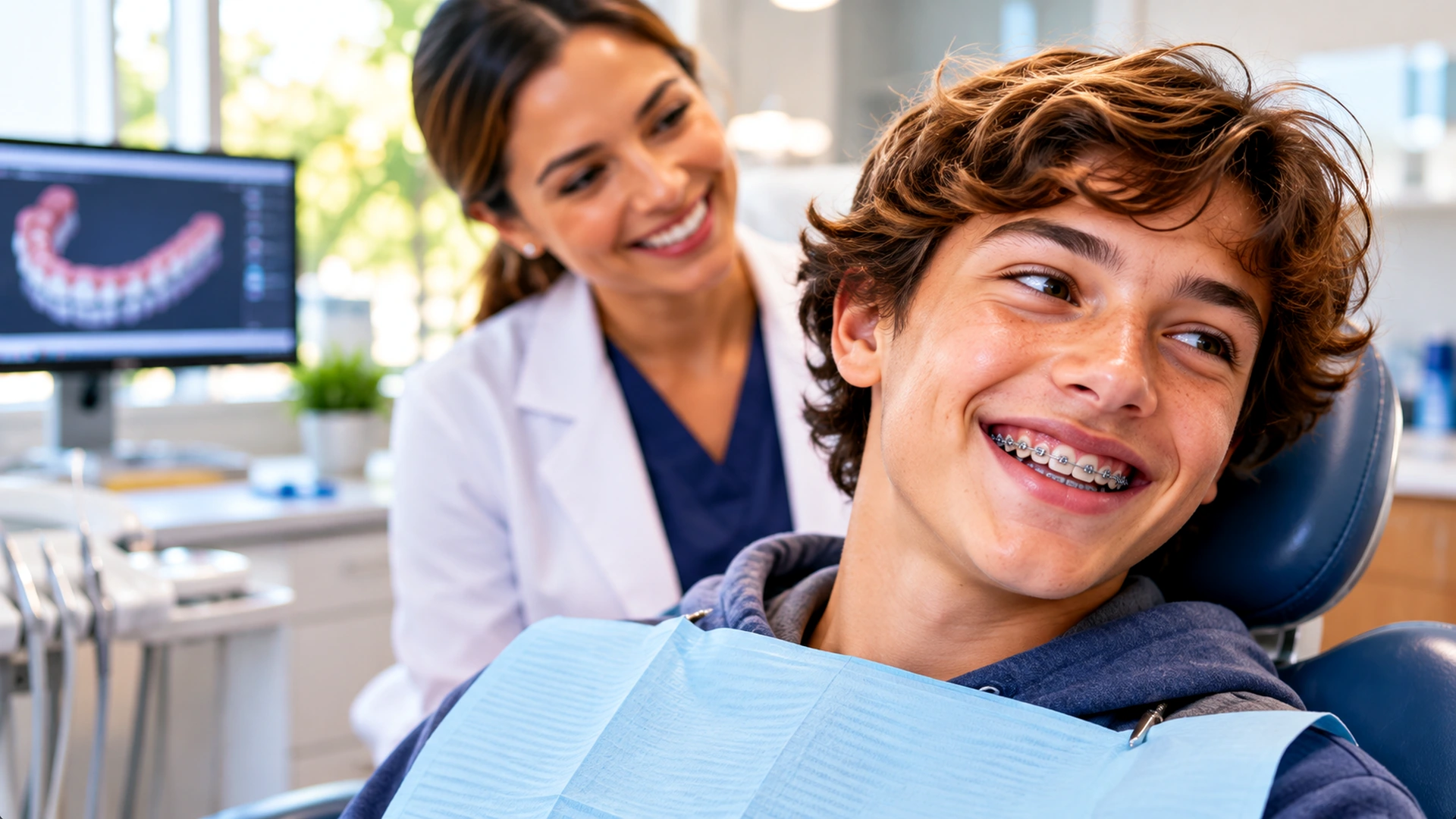
Braces can be useful when a patient prefers a fixed system, when cooperation with removable trays may be difficult, or when the planned movements are well suited to brackets, wires and orthodontic auxiliaries.
CONTINUOUS
They stay on
Brackets and wires remain in place between visits, so tooth movement does not depend on putting the appliance back in after meals.
VERSATILE
A broad treatment tool
Braces can be used in many crowding, spacing and bite situations. Complexity, growth and oral health still determine the exact plan.
VISIBLE BUT MODERN
Smaller than many patients expect
Modern metal brackets are more compact than older generations. Clear or tooth-colored bracket options may also be available depending on the treatment plan.
BRACES OR CLEAR ALIGNERS?
Both move teeth. They ask different things of the patient.
The choice is not simply “visible versus invisible.” Appliance control, planned movement, hygiene, eating habits, wear compliance, age and personal preference all matter.
FIXED
Braces
Stay on the teeth throughout active treatment. Useful when a fixed appliance is preferred or clinically advantageous.
REMOVABLE
Clear Aligners
Removed for eating and cleaning but must be worn as prescribed for treatment to progress.
ALTERNATIVE FIXED SYSTEM
Fastbraces®
A distinct fixed-brace approach that may offer a shorter treatment pathway in selected cases.
A PATIENT PERSPECTIVE
Hear about a Bright Smiles braces experience.
Hear a Bright Smiles patient perspective on going through braces treatment.
Christopher shares his experience with braces at Bright Smiles
A patient perspective on going through braces treatment at Bright Smiles.
YOUR EXPERIENCE WILL BE YOUR OWN
One testimonial cannot predict another patient’s treatment.
Your starting bite, appliance, treatment goals, biological response and cooperation influence the experience and timeline. A consultation is where we can explain what is realistic for you.
LIVING WITH BRACES
Good hygiene and appliance care protect the treatment.
Eating
Hard, sticky or very chewy foods can damage brackets or wires. Your team will explain which foods to modify or avoid.
Cleaning
Brackets create additional plaque-retention areas. Brushing around brackets, cleaning between teeth and keeping routine dental visits matter throughout treatment.
Soreness & adjustments
Temporary pressure or tenderness can occur after braces are placed or adjusted. Contact the office if a wire or bracket causes persistent irritation.
Retention
After active treatment, retainers help reduce unwanted tooth movement. The prescribed retention plan is part of the treatment result.
BRACES CONSULTATION
Find out whether braces fit your treatment goals.
Tell us who treatment is for and what you would like to change about the bite or smile. Our team can help you schedule the appropriate orthodontic consultation.
Insurance: We accept your insurance and will help you maximize your available benefits.
FREQUENTLY ASKED QUESTIONS
Braces questions patients ask
What to expect before, during and after fixed orthodontic treatment.
Are braces only for children and teenagers?
No. Adults can also be treated with braces when fixed orthodontic treatment fits their clinical needs and preferences.
What can braces help correct?
Braces may be used for crowding, spacing and many bite relationships. The exact treatment plan depends on diagnosis and the movements required.
How long will I wear braces?
Treatment time varies based on the starting bite, amount of tooth movement, growth, biology, appliance design and cooperation with care instructions.
Do braces hurt?
Pressure and temporary soreness are common when treatment starts or after adjustments. Persistent pain, a broken appliance or significant irritation should be reported to the office.
Can I eat normally with braces?
You can eat a wide variety of foods, but hard, sticky and very chewy foods often need to be avoided or modified to reduce the risk of broken brackets and wires.
How do I clean my teeth with braces?
Brush carefully around brackets and the gumline, clean between teeth and beneath wires, and maintain routine preventive dental care. Your team can demonstrate helpful tools.
Do you offer clear or ceramic braces?
Clear or tooth-colored bracket options may be available depending on the case and treatment plan. Ask during your consultation.
Are braces better than clear aligners?
Neither is universally better. Braces are fixed; aligners are removable and depend on prescribed wear. The required tooth movement, bite, hygiene and patient preference help determine the better fit.
What happens if a bracket or wire breaks?
Contact Bright Smiles for instructions. Some issues can wait until the next visit while others should be addressed sooner, depending on discomfort and how the appliance is functioning.
Will I need retainers after braces?
Yes, retention is normally recommended after active orthodontic treatment because teeth can shift over time.
Does insurance help pay for braces?
Benefits vary. We accept your insurance and will help you maximize your available benefits. Orthodontic plans may have age limits or lifetime maximums.
Can I switch from braces to clear aligners later?
Sometimes a combined or staged approach may be reasonable, but it depends on the treatment goal and progress. Your dentist can discuss whether changing appliances makes clinical sense.
YOUR NEXT STEP
Ready to find out whether braces are right for you?
Schedule an orthodontic consultation at the Bright Smiles location that works best for you.
Cumming • Lawrenceville • Dawsonville