

START WITH WHAT YOU ARE FEELING
You do not need to know whether the problem is the joint, the muscles or the bite before the evaluation.
TMJ and facial-pain symptoms overlap. Start with the concern that sounds most like yours; the examination is what determines which tissues and factors are most likely involved.
PAIN & TENDERNESS
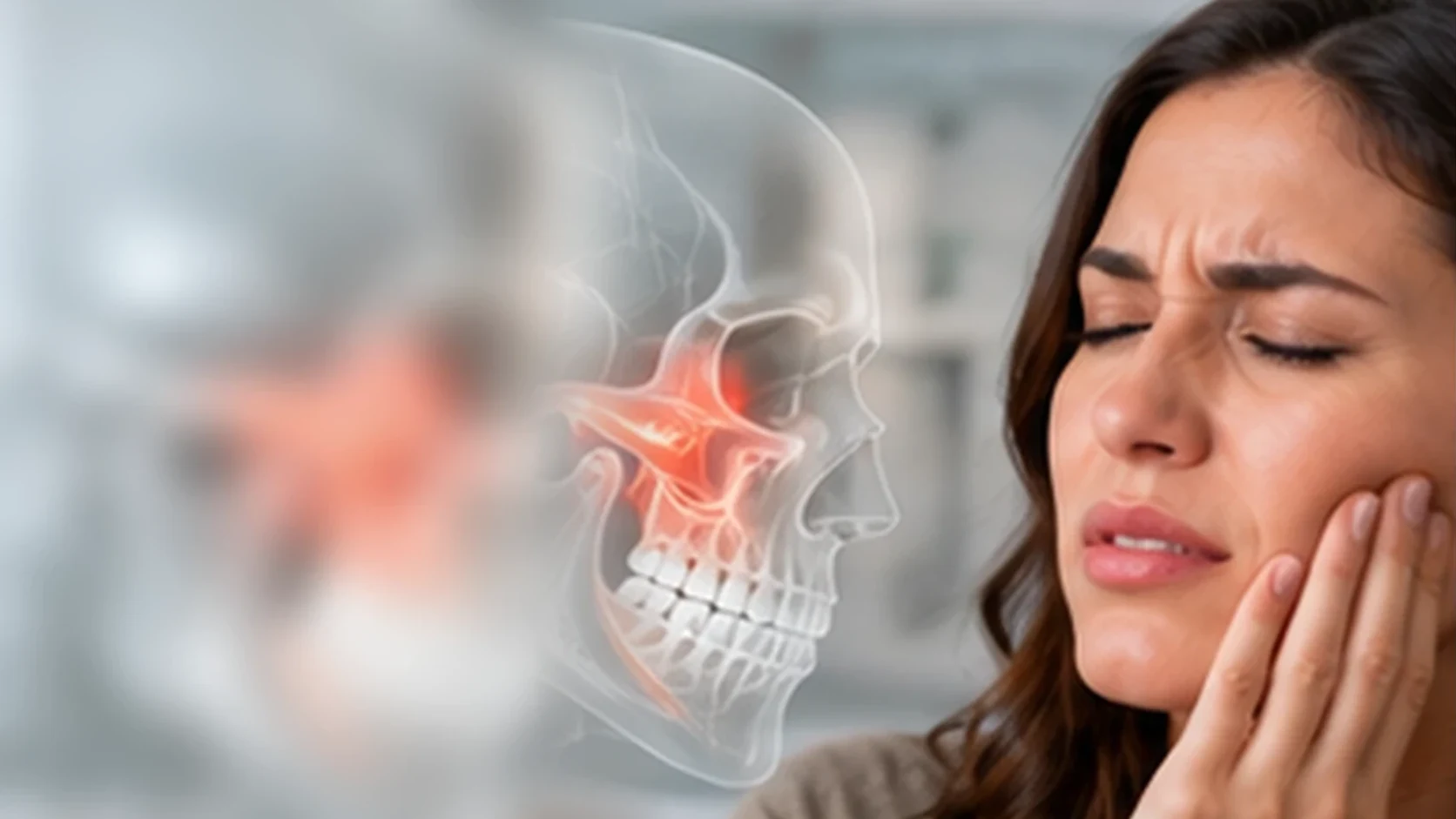
My jaw or face hurts
Pain may come from the jaw joint, chewing muscles, teeth or another source. Location, timing, tenderness and movement patterns help narrow the possibilities.
CLICKING • CATCHING • LIMITED MOTION
My jaw clicks, catches or does not move normally
Joint sounds are common and do not always require treatment. Pain, locking, limited opening or a sudden change in function deserves a closer look.
MUSCLE TENSION & BITE CHANGES
I clench, grind or my bite feels different
Clenching, grinding and muscle overuse can contribute to soreness or fatigue, but they are not the only possible causes. A changed bite can also be a clue that needs evaluation.
TMJ & TMD SYMPTOMS
Similar symptoms can come from different structures.
TMD is a broad term for disorders involving the temporomandibular joints, chewing muscles and related structures. That is why treatment should follow the diagnosis rather than the symptom name alone.
JOINT
Pain, clicking or catching
Symptoms in front of the ear may involve the joint itself, surrounding tissues or a combination of joint and muscle factors.
MUSCLES
Tightness, fatigue & referred pain
Chewing muscles can become tender or fatigued and can refer discomfort into the temples, cheeks, ears or neck.
FUNCTION
Limited opening or a changed bite
Restricted movement, deviation, locking or a new change in how the teeth meet can help guide the examination and next steps.
WHAT CAN CONTRIBUTE TO TMD SYMPTOMS
Jaw pain is not automatically a “bad bite.”
The examination considers dental, muscular, joint and medical contributors. More than one factor can be present at the same time.
Clenching & grinding
Parafunction can contribute to muscle fatigue, soreness and tooth wear, but the presence of clenching does not prove it is the only source of pain.
Joint or disc problems
Inflammation, internal joint changes or altered movement can produce pain, noises or limitation. The clinical pattern determines whether additional imaging or referral is useful.
Dental & bite factors
Tooth pain, missing support, recent dental changes or the way the teeth contact can influence symptoms and should be evaluated in context.
Trauma, arthritis & other causes
Injury, systemic joint disease, infection and non-dental pain conditions can mimic or contribute to TMD symptoms and may require care beyond dentistry.
DIAGNOSIS BEFORE APPLIANCE
How Bright Smiles evaluates TMJ and TMD concerns
History and examination come first. Depending on what we find, additional records can be used when they add clinically useful information rather than simply because a technology is available.
CLINICAL EVALUATION
We look at joints, muscles, movement, teeth and bite together.
Evaluation may include symptom history, range of motion, joint sounds, muscle tenderness, tooth wear, dental findings, bite relationships and oral habits.
WHEN MORE INFORMATION IS NEEDED
Imaging, medical evaluation or referral may be appropriate.
Significant trauma, swelling, neurologic symptoms, persistent locking, suspected joint disease or pain that does not fit a dental or musculoskeletal pattern may change the diagnostic pathway.
UNDERSTAND THE TERMS
TMJ is the joint. TMD describes disorders involving the joint, muscles and related structures.
The distinction matters because a clicking joint, sore chewing muscles and a toothache can all feel like “TMJ pain” to a patient while requiring different treatment.
Where the symptoms are most likely coming from
A focused history and examination can help distinguish primarily muscular patterns, joint-related findings, dental causes and situations that need additional evaluation.
WHAT ONE TEST CANNOT DECIDE
No single measurement should dictate irreversible treatment.
Muscle relaxation, bite records, imaging or appliance response can add information, but each finding should be interpreted with the rest of the clinical picture.
A STEPWISE PLAN
From evaluation to reassessment
Evaluate
Review symptom history, joint and muscle findings, range of motion, teeth, bite and relevant dental or medical factors.
Measure when useful
Add imaging, bite records or neuromuscular measurements when they can answer a specific clinical question.
Start conservatively
Self-care, habit modification, muscle-focused care, TENS or a removable orthotic may be considered according to the findings.
Reassess
Monitor pain, motion, tenderness, chewing function and appliance response before deciding whether the plan should continue, change or involve referral.
CONSERVATIVE TREATMENT OPTIONS
The right tool depends on what the evaluation shows.
Not every patient needs an orthotic, TENS or the same wear schedule. Treatment is selected according to the diagnosis, goals and response over time.
REMOVABLE APPLIANCE
Neuromuscular bite registration & orthotic
In selected cases, bite records and a removable orthotic can be used as part of a conservative, reversible treatment plan. The appliance design and wear schedule depend on the clinical objective.
MUSCLE RELAXATION & ASSESSMENT
TENS for jaw / TMJ pain
TENS may be used in selected cases to help relax jaw muscles or support a neuromuscular assessment. It is an adjunct—not a stand-alone diagnosis or a guaranteed cure.
PERSONALIZED TMJ CARE
Treatment should fit the diagnosis, the patient and the larger dental picture.
Care with Dr. Sangita Venkatesh, BDS, DMD, MSc
Dr. Sangita Venkatesh evaluates TMJ/TMD concerns as part of Bright Smiles’ comprehensive dental care. Planning can account for dental disease, existing restorations, bite relationships and other treatment needs rather than looking at jaw symptoms in isolation.
Specific treatment, technology and provider availability are confirmed during evaluation.
Insurance & financial planning
We accept your insurance and will help you maximize your available benefits. Coverage for examinations, imaging, orthotics and related services varies by plan.
Our team can review estimated fees, available benefits and payment or financing options before treatment begins.
START WITH A TMJ / TMD EVALUATION
Tell us what you are feeling and how it is affecting function.
Use the form to start a conversation about jaw pain, clicking, limited opening, muscle tension, clenching or a changed bite. You can also book your preferred Bright Smiles office directly.
Prefer to schedule now?
Submitting the form starts a conversation with the Bright Smiles team. Treatment recommendations are made after clinical evaluation.
FREQUENTLY ASKED QUESTIONS
TMJ & TMD questions patients ask
The right treatment depends on the individual diagnosis and clinical findings.
What do TMJ and TMD mean?
TMJ refers to the temporomandibular joint. TMD is a broader term for disorders involving the jaw joints, chewing muscles and related structures.
Does clicking mean I need treatment?
Not necessarily. Painless clicking can occur without a progressive problem. Clicking with pain, locking, limited motion or functional difficulty deserves evaluation.
Can clenching or grinding cause jaw pain?
They can contribute to muscle fatigue, tooth wear and soreness, but jaw pain may have multiple causes. An examination helps determine whether clenching is likely to be a major contributor.
Can TMJ or muscle problems contribute to headaches or ear-area discomfort?
Jaw-muscle pain can refer into the temples, cheeks, ear area or neck, but headaches and ear symptoms have many possible causes. Persistent or unusual symptoms should be evaluated appropriately.
What is a dental orthotic?
A dental orthotic is a removable appliance designed for a specific functional or therapeutic goal. The design, jaw position and wear schedule depend on the diagnosis and treatment plan.
Is a night guard the same as a TMJ orthotic?
Not always. A night guard is commonly intended to protect teeth from wear. A therapeutic orthotic may be designed around a specific jaw-position, muscle or functional objective.
What is neuromuscular bite registration?
It is a way of recording the relationship of the jaws after evaluating muscle activity and function. In selected cases, that information can help guide a removable orthotic; it does not by itself prove the cause of pain.
How is TENS used in TMJ care?
In selected cases, TENS may be used to help relax jaw muscles or support a neuromuscular assessment. It is an adjunct and is not a stand-alone diagnosis or cure.
Will an orthotic permanently change my bite?
The purpose and expected effects depend on the appliance. Reversible orthotic therapy should be evaluated over time, and permanent restorative or orthodontic changes should not be assumed from a short-term response.
How long does TMJ treatment take?
There is no single timeline. It depends on the diagnosis, how long symptoms have been present, tissue response and whether the condition is primarily muscular, joint-related, dental or multifactorial.
Does insurance help with TMJ treatment?
Benefits vary by plan and by the service performed. We accept your insurance and will help you maximize your available benefits. Our team can review available information and estimated patient responsibility before treatment.
When should jaw pain be evaluated urgently?
Seek prompt care for significant facial or jaw trauma, rapidly increasing swelling, fever, new neurologic symptoms, or a jaw that becomes locked open or closed.
YOUR NEXT STEP
Ready to have your jaw symptoms evaluated?
Schedule a TMJ/TMD evaluation at Cumming, Lawrenceville or Dawsonville. We will start by identifying the likely source of the symptoms before discussing an appliance or other treatment.
Cumming • Lawrenceville • Dawsonville