


MATCH THE TOOL TO THE PROBLEM
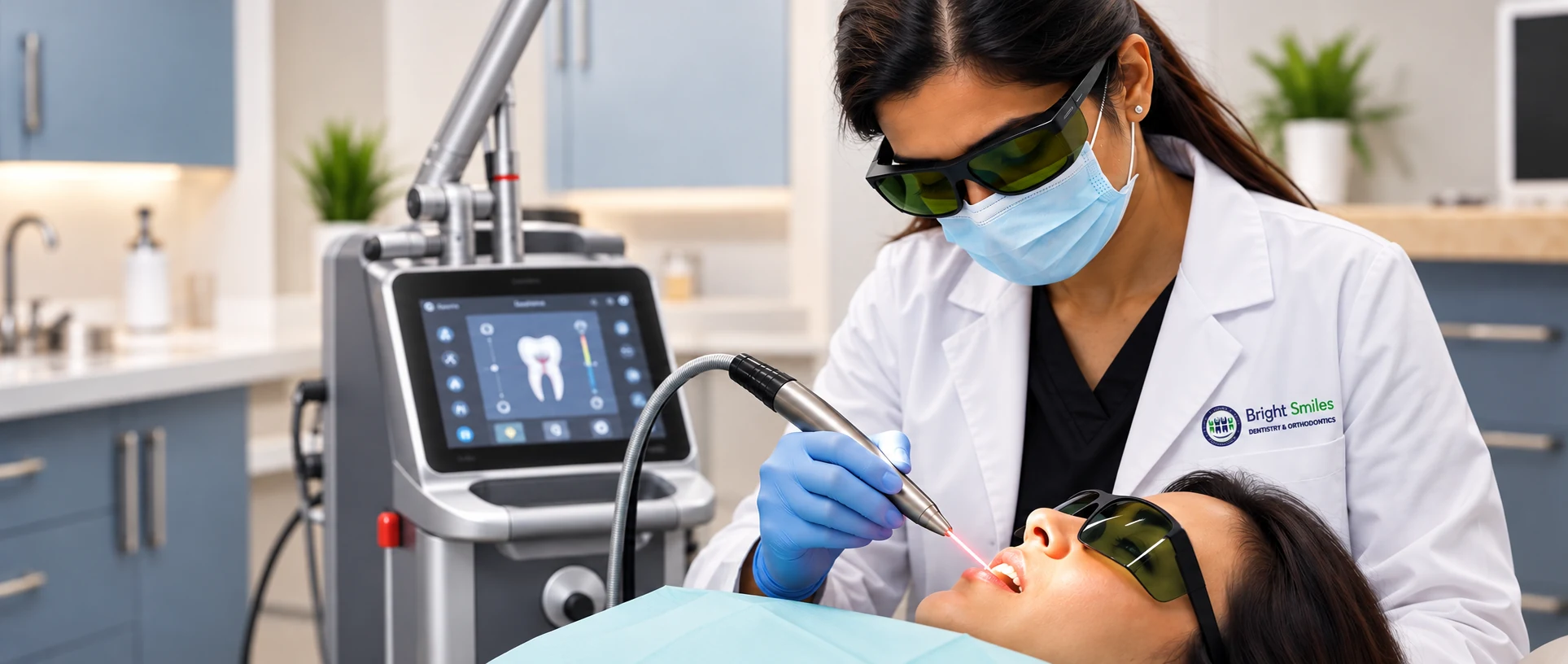
Laser care is not one procedure. Different goals require different approaches.
The diagnosis comes first. These pages explain several ways laser or light-based treatment may be used at Bright Smiles.
ORAL ULCERS
Canker Sore Treatment
Laser treatment may be considered for selected aphthous ulcers to help manage symptoms and support comfort after the lesion has been evaluated.
ALTERED SENSATION
PBM for Nerve Injury
Photobiomodulation may be considered as part of care for selected nerve injuries or altered sensation. The underlying injury and timing matter, and recovery cannot be guaranteed.
NUMBNESS
PBM for Numbness
Persistent numbness requires evaluation of the cause. PBM may be discussed in selected cases as an adjunct rather than a substitute for diagnosis and follow-up.
HARD-TISSUE LASER CARE
Laser Cavity Treatment
Selected cavities can be prepared with a hard-tissue laser. The approach may reduce vibration and preserve healthy tooth structure; conventional drilling or anesthesia may still be needed.
PERIODONTAL LASER CARE
Laser Gum Disease Treatment
Laser-assisted periodontal treatment can support selected gum disease procedures alongside scaling, root planing, and appropriate follow-up. It does not replace conventional periodontal care.
SOFT-TISSUE PRECISION
Laser Gum Contouring
Selected gum reshaping, gingivectomy, and crown-lengthening procedures can be performed with precise laser tissue management. Suitability and healing vary.
A laser is a treatment tool, not a diagnosis. The clinical question comes first; the technology is chosen only when it fits that question.
HOW WE USE LASER & LIGHT-BASED CARE
Identify the target problem, choose the treatment approach, then reassess the response.
Laser settings and treatment schedules should follow the tissue, diagnosis and goal rather than a one-size-fits-all protocol.
DIAGNOSIS
Identify what is being treated
We confirm the clinical problem, review relevant history and determine whether laser or photobiomodulation is appropriate for that goal.
TREATMENT DESIGN
Select the appropriate modality
The wavelength, energy, treatment area and timing depend on the tissue and intended effect. Different laser applications are not interchangeable.
FOLLOW-UP
Track symptoms and clinical response
Response is reassessed over time. Additional evaluation or a different treatment path may be needed when symptoms persist or the diagnosis changes.
A MORE TARGETED APPROACH
Where appropriate, laser dentistry can treat tissue with greater precision and less disruption.
Many laser procedures focus energy on a precise treatment area. Depending on the procedure, this may reduce bleeding, swelling, or the need for sutures and can make recovery more comfortable. Benefits vary with tissue type, laser settings, and patient factors; some procedures still require anesthesia or conventional instruments.
PRECISION
Precise treatment of selected tissues
Focused laser energy can treat selected soft tissues while limiting interaction with nearby structures when used appropriately. It is not suitable for every dental procedure.
COMFORT
Potentially gentler recovery
For some soft-tissue procedures, laser techniques may reduce bleeding, postoperative swelling, and the need for stitches. Comfort, anesthesia, and healing time still depend on the individual treatment.
INDIVIDUAL CARE
Treatment tailored to the diagnosis
Laser surgery, non-surgical laser therapy, and photobiomodulation have different purposes. We choose the approach based on your diagnosis and explain alternatives and expected recovery.
PRESERVE HEALTHY TOOTH STRUCTURE
Laser cavity preparation and restorative applications
Our Waterlase iPlus and LightWalker platforms support selected hard-tissue applications. Technique and suitability depend on the tooth, restoration, and diagnosis.
CAVITY PREPARATION
Laser cavity treatment
Laser energy can remove selected areas of tooth decay and prepare enamel or dentin. Some treatments may involve less vibration, but not every cavity can be treated entirely without a conventional instrument or local anesthesia.
SENSITIVITY
Tooth desensitization
Certain laser protocols may help reduce dentin hypersensitivity. We first evaluate the cause, including exposed roots, decay, cracks, or gum recession, before selecting treatment.
DIAGNOSTICS
Detection and prevention
Laser fluorescence can assist caries detection when the appropriate diagnostic device is used. Preventive laser protocols are not a replacement for fluoride, oral hygiene, dietary guidance, and risk-based monitoring.
SOFT-TISSUE LASER DENTISTRY
Precise gum reshaping, frenectomies, and selected tissue procedures
Soft-tissue lasers can shape or remove selected oral tissues while supporting bleeding control. Depending on the procedure, fewer sutures may be needed, but anesthesia and recovery requirements vary.
COSMETIC GUM CARE
Gum contouring and gingivectomy
Laser gingivoplasty can refine uneven gum margins or remove excess tissue in selected cases. Crown lengthening may also require management of supporting bone; a laser alone is not always sufficient.
TONGUE-TIE / LIP-TIE
Laser frenectomies
When a functional restriction warrants treatment, laser frenectomy or frenotomy may be considered after an appropriate examination and discussion of benefits, alternatives, and follow-up.
ORAL LESIONS
Lesion care and tissue sampling
Lasers may help treat selected symptomatic oral lesions or obtain tissue samples. Persistent, recurrent, or suspicious lesions require diagnosis; biopsy specimens must be handled appropriately.
SUPPORTING CONVENTIONAL TREATMENT
Laser-assisted gum disease and root canal treatment
We use laser technology as part of selected periodontal and endodontic procedures—not as a universal substitute for established methods.
PERIODONTAL CARE
Laser gum disease treatment
Lasers may support pocket decontamination and management of inflamed tissue in selected cases. Scaling, root planing, periodontal assessment, and ongoing maintenance remain essential when indicated.
ROOT CANAL CARE
Laser-assisted canal disinfection
Laser-assisted irrigation or disinfection can complement cleaning, shaping, and filling of root canal systems. It does not replace the full root canal procedure or guarantee success.
CARE PLANNING
Choose the right technique
We consider disease severity, tooth anatomy, soft-tissue condition, and other treatment options before choosing a laser protocol or recommending conventional care.
NON-CUTTING LIGHT-BASED CARE
Photobiomodulation, symptom relief, and sleep-related applications
Therapeutic laser settings differ from cutting or ablation. PBM may be considered for selected symptoms and healing goals, with results dependent on the condition and clinical evidence.
PBM
TMJ pain and tissue recovery
In selected cases, photobiomodulation may be offered as an adjunct for discomfort or inflammation. It is not a replacement for evaluation of the underlying jaw, nerve, or soft-tissue problem.
SENSATION
Nerve injury and numbness
Our dedicated pages explain selected PBM applications for nerve injuries and altered sensation. No laser treatment can promise nerve recovery or the return of normal feeling.
SLEEP CARE
NightLase for selected snoring
NightLase may be an option for selected snoring concerns after evaluation. Snoring can indicate obstructive sleep apnea; appropriate medical or sleep assessment remains important.
INSURANCE & FINANCIAL PLANNING
Know the plan before treatment begins.
We accept your insurance and will help you maximize your benefits. Coverage varies by plan, diagnosis and procedure. Our team can review expected fees, available benefits and payment or financing options before treatment begins.
Treatment recommendations are based on clinical need, not on whether a particular service is covered.
CARE CLOSE TO HOME
Choose the Bright Smiles location that works best for you.
Specific provider, technology and appointment availability can be confirmed when you schedule.
Lawrenceville
845 Scenic Hwy S, Suite 300, Lawrenceville, GA 30046
Dawsonville
78 Dawson Village Way N, Suite 170, Dawsonville, GA 30534
START WITH AN EVALUATION
Talk with Bright Smiles about laser or photobiomodulation care.
Use the location links to schedule directly. The appropriate modality and treatment plan are confirmed only after clinical evaluation.
FREQUENTLY ASKED QUESTIONS
Questions about laser dentistry and photobiomodulation
Laser technology can be useful in selected situations, but the expected benefit depends on the diagnosis, treatment goal and individual response.
What is laser dentistry?
Laser dentistry uses focused light energy for selected dental and soft-tissue applications. Different wavelengths interact with tissue differently, so the diagnosis and treatment goal determine whether a laser is appropriate.
Can laser treatment help a canker sore?
Laser treatment may be used for selected aphthous ulcers to help manage symptoms. It does not guarantee that future sores will not occur, and an unusual or persistent lesion should be evaluated before treatment.
What is photobiomodulation (PBM)?
Photobiomodulation uses light at selected parameters to influence biological responses without cutting tissue. It may be used as an adjunct in selected situations, and results vary by condition and patient.
Can PBM guarantee that numbness or altered sensation will resolve?
No. Recovery depends on the cause, severity and timing of the nerve problem. PBM may be discussed in selected cases, but it cannot guarantee return of sensation.
Is PBM the same as laser surgery?
No. PBM is a light-based therapeutic approach that does not use the laser to cut or remove tissue. Surgical laser applications and PBM have different goals and settings.
How many laser or PBM visits will I need?
That depends on the diagnosis, treatment goal and response. Some concerns may involve a single visit while others require reassessment or a series of treatments.
YOUR NEXT STEP
Not sure whether laser treatment is the right tool for your concern?
Start with the diagnosis. We can evaluate the problem, explain whether laser or photobiomodulation is appropriate, and discuss alternatives when another approach makes more sense.
Cumming • Lawrenceville • Dawsonville