

What is bone grafting?
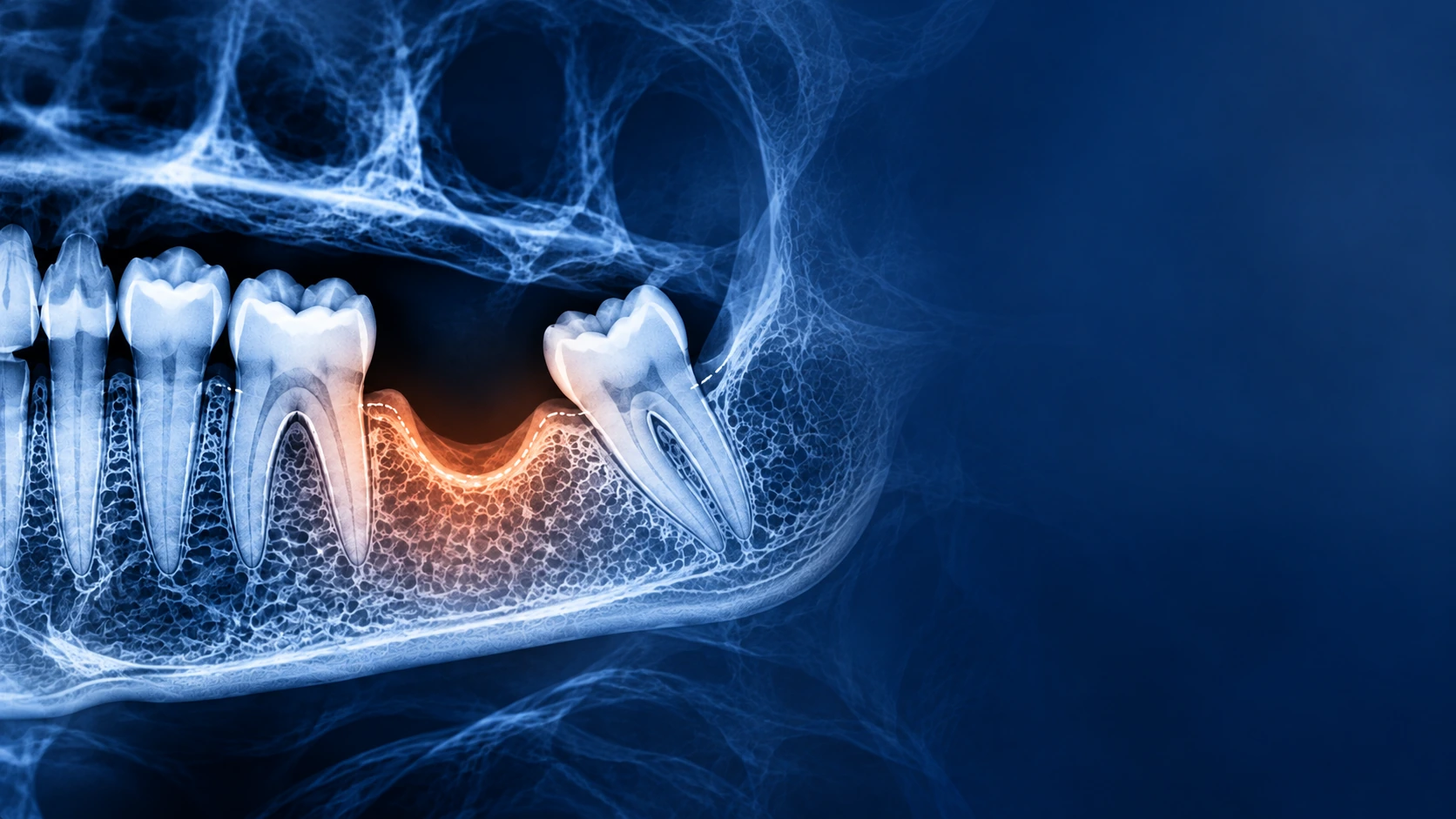
Bone grafting places graft material in an area where jawbone has been lost or needs additional volume. The material acts as a scaffold while your body forms new bone in the area.

When might grafting be needed?
Grafting may be considered after a tooth is removed, when bone has been lost from disease or trauma, or when an implant site does not have the bone volume or contour needed for the planned restoration.

Does every implant need a bone graft?
No. Grafting is recommended only when the site needs additional bone or ridge form for the treatment being planned. Examination and imaging help determine whether it is necessary.

How long does a bone graft take to heal?
Healing varies with the size and location of the graft, the material used and the next phase of treatment. Many grafts require several months of healing before the site is re-evaluated.
REBUILDING THE FOUNDATION
Bone grafting is used when the jaw needs more support for the treatment being planned.
Jawbone can lose volume after tooth removal, periodontal disease, trauma or long periods without a tooth in the area. Bone grafting places graft material into a deficient site so new bone can develop around it. Depending on the situation, grafting may be performed at the time of extraction, before implant placement or as part of a larger reconstructive plan.
WHY THE BONE MATTERS
The graft is planned around what the site needs to support.
Bone grafting is not one procedure used the same way in every case. The location of the defect, the amount of bone present and the restoration planned afterward determine whether the goal is to preserve an extraction socket, rebuild a collapsed ridge, add bone beneath the sinus or restore support in another area.
AFTER EXTRACTION
Help preserve the ridge
After a tooth is removed, the surrounding ridge can remodel and lose volume. A socket graft may be used to help preserve the site when future tooth replacement is being considered.
IMPLANT FOUNDATION
Build support for an implant
Dental implants need adequate bone in the planned position. If the site is deficient, grafting may be used to create or improve the foundation before or with implant treatment.
RIDGE FORM
Rebuild a deficient ridge
When the jaw ridge has narrowed, shortened or changed shape, augmentation may be considered to restore the dimensions needed for the restorative plan.
BONE LOSS
Address selected areas of bone loss
Bone loss from periodontal disease, trauma or previous tooth loss can create defects that require site-specific planning. The grafting approach depends on the anatomy and treatment goal.
Bone grafting is not a stand-alone goal. The purpose is to preserve or rebuild the foundation required for the tooth, implant or restoration that comes next. The graft should be selected and placed with that final plan in mind.
FROM DIAGNOSIS TO HEALING
How bone grafting is planned and completed
The exact sequence depends on the location and size of the defect, but grafting begins with diagnosis and ends with re-evaluation of the healed site before the next restorative phase.
01
Evaluate the site
We examine the teeth, gums and ridge and use appropriate imaging to understand the amount and shape of available bone.
02
Define the treatment goal
The plan may be to preserve an extraction socket, rebuild ridge width or height, prepare an implant site or add bone in another deficient area.
03
Select the grafting approach
Graft material may be synthetic, obtained from a donor source or, in selected situations, from your own bone. The material and technique depend on the defect and planned treatment.
04
Place the graft
The site is prepared and graft material is placed where additional bone or ridge preservation is needed. The procedure is tailored to the anatomy of the area.
05
Allow healing & integration
The graft serves as a scaffold while new bone develops. Healing commonly takes several months and varies with the procedure and the individual site.
06
Re-evaluate the site
Follow-up visits and imaging when appropriate help determine how the area has healed and when the next stage of treatment can begin.
WHEN GRAFTING MAY BE PART OF THE PLAN
Not every extraction or implant site needs the same kind of graft
The need for grafting is determined by the existing bone, the location of the defect and what the site will need to support after it heals.
SOCKET PRESERVATION
A tooth is being removed
Grafting at the time of extraction may be considered when preserving ridge form is important for future replacement of the tooth.
IMPLANT PLANNING
An implant site lacks bone
If examination or imaging shows inadequate bone volume for the planned implant position, grafting may be recommended before or with implant treatment.
RIDGE AUGMENTATION
The ridge has already collapsed
A narrow, short or irregular ridge may require augmentation to rebuild the site for the planned implant-restoration relationship.
SINUS LIFT
The upper back jaw has limited bone height
When the sinus is close to the planned implant site, a sinus lift may be used to create additional bone in the upper premolar or molar region.
DISEASE OR TRAUMA
Bone has been lost around a site
Periodontal disease, trauma and previous tooth loss can change the amount and contour of jawbone. Treatment depends on the pattern and severity of the defect.
PLAN FIRST
Grafting is not automatically required
Some sites already have sufficient bone for the treatment planned. Grafting should be recommended only when it addresses a specific anatomic or restorative need.
COMMON GRAFTING APPROACHES
Socket graft, ridge augmentation, sinus lift or another site-specific plan
The name of the procedure describes the problem being addressed. A small extraction socket and a larger ridge defect are different clinical situations and may require different materials, techniques and healing periods.
PRESERVE
Socket graft
Graft material is placed in an extraction socket to help preserve ridge dimensions while the site heals and future tooth replacement is planned.
REBUILD
Ridge augmentation
Ridge augmentation is used when the jaw ridge has already lost width, height or contour and needs to be rebuilt for the planned restoration.
UPPER JAW
Sinus lift
A sinus lift adds graft material beneath the sinus in the back of the upper jaw when more bone height is needed for implant planning.
SITE-SPECIFIC
Other grafting needs
Bone defects vary in size and shape. The appropriate graft material and technique are selected after the site and the intended final restoration are evaluated together.
HEALING AFTER A BONE GRAFT
Protect the graft while the site heals and new bone develops
Post-operative instructions and follow-up are part of the grafting procedure. The goal during healing is to protect the surgical site and monitor how the graft is integrating before the next stage of treatment.
FOLLOW INSTRUCTIONS
Use the post-operative plan
Follow the cleaning, medication and activity instructions provided for your specific procedure. Different grafting sites can require different precautions.
PROTECT THE SITE
Avoid disturbing the graft
The surgical area needs time to stabilize. Follow the instructions you are given about brushing, rinsing, chewing and protecting the treated area.
FOLLOW-UP
Keep scheduled rechecks
Follow-up visits allow us to evaluate soft-tissue healing and, when appropriate, assess how the grafted area is developing before treatment continues.
CONTACT US
Report unexpected changes
If symptoms or healing seem different from what you were told to expect, contact the office so the site can be evaluated rather than waiting for the next scheduled visit.
COST, INSURANCE & FINANCING
Bone grafting fees depend on the site, extent of the defect and grafting approach
The cost of bone grafting varies with the location and size of the graft, the material used and whether the procedure is a socket graft, ridge augmentation, sinus lift or another type of reconstruction.
We accept your insurance and will help you maximize your available benefits. Coverage varies by plan and procedure. Our team can review estimated benefits and discuss financing options before treatment begins.
CARE CLOSE TO HOME
Start your bone grafting evaluation at the office that works for you
Choose Cumming, Lawrenceville or Dawsonville. We can evaluate the area of bone loss, review the intended restorative or implant plan and explain whether grafting is needed and what type may fit the site.
Cumming
907 Buford Rd, Suite 100
Cumming, GA 30041
678-922-8282
Bone grafting consultations available
Lawrenceville
845 Scenic Hwy S, Suite 300
Lawrenceville, GA 30046
770-277-5588
Bone grafting consultations available
Dawsonville
78 Dawson Village Way N, Suite 170
Dawsonville, GA 30534
706-525-7127
Bone grafting consultations available
FREQUENTLY ASKED QUESTIONS
Bone grafting questions, answered clearly
What is bone grafting?
Bone grafting places graft material in an area where jawbone has been lost or needs additional volume. The graft acts as a scaffold while new bone develops around and through the treated area.
When is bone grafting needed?
It may be considered after tooth extraction, when bone has been lost from periodontal disease or trauma, or when an implant site does not have the dimensions or contour needed for the planned restoration.
How does the bone grafting process work?
The site is evaluated and prepared, graft material is placed into the deficient area, and the graft is protected while healing occurs. Follow-up is used to assess the site before the next phase of treatment.
What materials can be used for a dental bone graft?
Depending on the case, graft material may be synthetic, obtained from a donor source or, in selected situations, from your own bone. The material is chosen according to the defect and the treatment goal.
What is a socket graft?
A socket graft is placed in the area where a tooth has been removed. Its purpose is to help preserve ridge form while the extraction site heals and future tooth replacement is considered.
What is ridge augmentation?
Ridge augmentation is used when the jaw ridge has already lost width, height or contour. The goal is to rebuild the site so it better supports the planned implant or restoration.
What is a sinus lift?
A sinus lift is a grafting procedure used in the back of the upper jaw when limited bone height exists beneath the sinus. Graft material is placed to create additional bone for implant planning.
How long does a bone graft take to heal?
Healing varies with the size and location of the graft, the material used and the next treatment planned. Many grafts require several months of healing before the site is re-evaluated.
What should I expect after bone grafting?
Post-operative instructions are specific to the procedure. Swelling or discomfort can occur after surgery, and the site needs to be protected while healing begins. Follow the instructions you are given and contact the office if healing seems different from what was expected.
Are there risks with bone grafting?
As with other surgical procedures, possible complications include infection, delayed healing or failure of the graft to integrate as intended. Your dentist will discuss the risks that apply to the specific procedure being considered.
Does every dental implant require a bone graft?
No. Some implant sites already have adequate bone. Grafting is considered when examination and imaging show that additional bone or ridge form is needed for the planned implant-restoration relationship.
When can an implant be placed after a bone graft?
The timing depends on the graft, the site and how healing progresses. In some situations grafting and implant treatment may be combined; in others the graft is allowed to heal for several months before implant placement is considered.
RELATED TOOTH REPLACEMENT CARE
Bone grafting often connects to the treatment planned after the site heals
Could bone grafting be part of your treatment plan?
Start with an evaluation of the site and the restoration or implant that the area ultimately needs to support. We will explain whether grafting is necessary, what problem it is intended to solve and how it affects the treatment sequence.
If the site already has adequate bone, we will explain that too. The goal is the right foundation for the final treatment — not grafting for its own sake.
Cumming • Lawrenceville • Dawsonville
Socket grafting • Ridge augmentation • Sinus lift • Implant-site planning