


 Cumming • Lawrenceville • Dawsonville
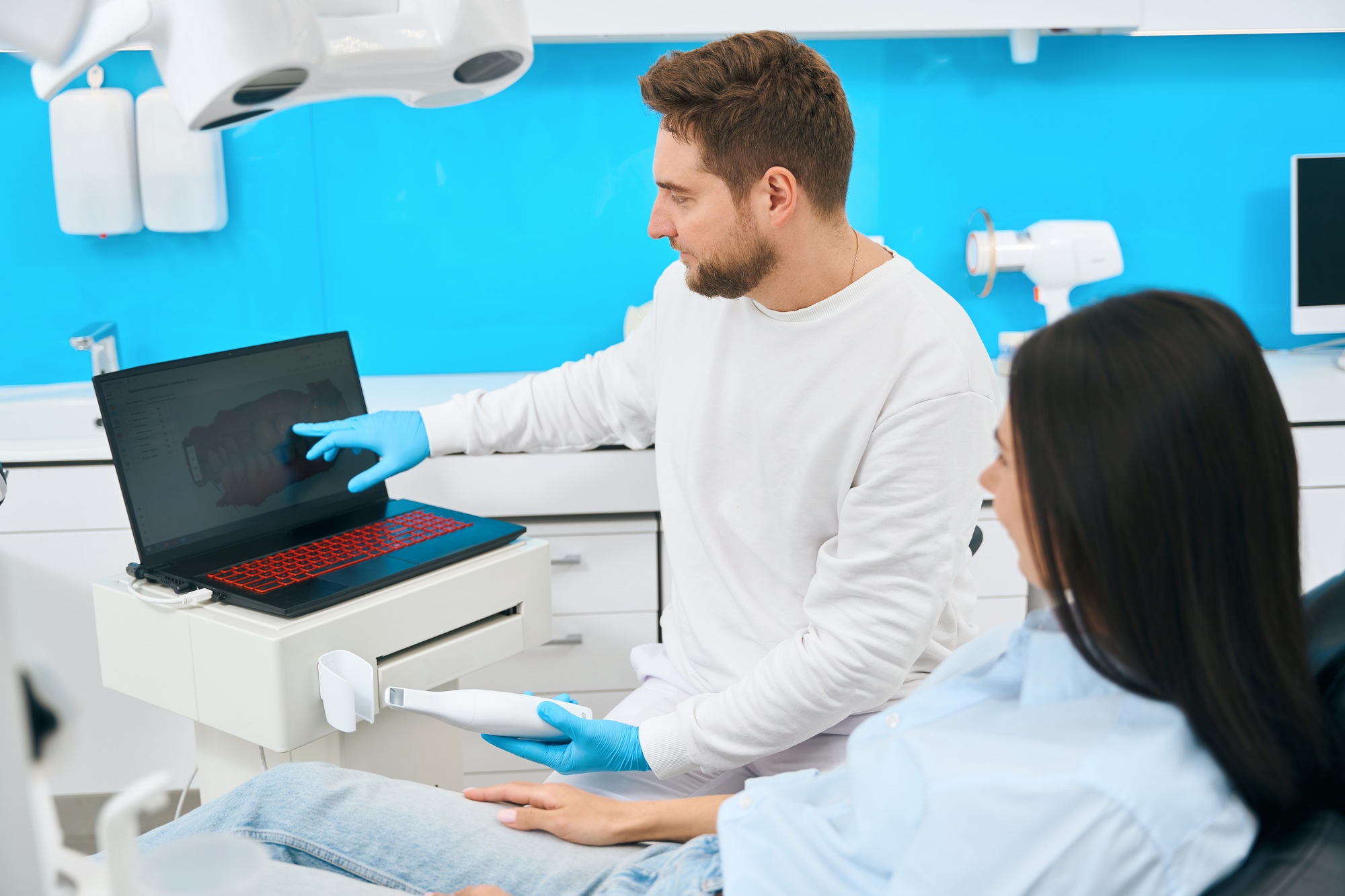
 3D diagnostics & digital planning
 Advanced guided implant technology
 Second opinions welcomed

What do we evaluate?
Your teeth, gums, bone, bite, medical history, existing dental work and the restoration the implant would need to support.

Will I need a 3D scan?
Not automatically. Imaging is selected after clinical evaluation when it adds useful information for diagnosis or implant planning.

Do I have to choose treatment that day?
No. The consultation is designed to clarify your options, sequence, tradeoffs and expected costs so you can make an informed decision.

Can you review another implant plan?
Yes. Bring recent X-rays and the existing treatment plan. Bright Smiles also offers second opinions when appropriate.
START WITH THE RIGHT QUESTION
An implant consultation should answer more than “Can an implant fit here?”
Patients often arrive with a treatment name already in mind: one implant, an implant bridge, an implant-supported denture, “All-on-4,” or full-arch teeth. But the right starting point is not choosing a product. It is understanding the condition of the teeth, gums, bone, bite, medical history, existing dental work and the result you want at the end.
Sometimes the tooth a patient expects to replace can still be predictably maintained. Sometimes a missing tooth can be replaced in more than one way. Sometimes the problem is bigger than one space and should be planned as a group of teeth rather than one implant at a time.
Your consultation is where those possibilities are sorted out. The goal is to leave with a clearer diagnosis, a realistic set of options, and an understanding of what would have to happen before, during and after implant treatment.
WHAT TO EXPECT
What actually happens during an implant consultation?
The exact visit depends on your situation and the records you already have. A complex full-mouth case may require more information than a single missing tooth, but the clinical questions are similar.
01 — Listen first
We start with what is bothering you, what has already been done, what you hope to change and what matters most to you — function, appearance, stability, avoiding removable teeth, shortening treatment time, preserving teeth or another priority.
02 — Review dental history
Previous extractions, root canals, bridges, dentures, grafts, implants, gum treatment, orthodontics, trauma and prior treatment plans can all change the next decision.
03 — Review health & medications
Implant placement is surgery. Your medical history, current medications, allergies, nicotine use and healing-related risks matter before treatment is planned.
04 — Examine teeth & gums
We evaluate decay, fractures, mobility, infection, periodontal support, gum health, restorative space and whether neighboring teeth influence the plan.
05 — Evaluate bite & final teeth
The implant is not the finished treatment. We plan around the crown, bridge, denture or full-arch teeth it must ultimately support — including space, appearance, chewing forces and maintenance.
06 — Review imaging
Existing X-rays may answer some questions. When 3D information is clinically useful, CBCT can help evaluate anatomy and proposed implant sites in three dimensions.
07 — Compare treatment pathways
We discuss whether saving a tooth, replacing one tooth, replacing several teeth together, stabilizing a removable denture or rebuilding an entire arch is the more sensible direction.
08 — Build the sequence
If treatment is appropriate, we map what happens first, what may be combined, what requires healing time, what temporary teeth may be used and when the final restoration would be completed.
DIAGNOSIS BEFORE SURGERY
What we evaluate before recommending an implant
A successful implant plan is not just a measurement of bone. The site, the patient and the final restoration all have to work together.
The tooth itself
Is the tooth truly non-restorable, or can it be predictably maintained? We look at cracks, decay, previous root canal treatment, remaining tooth structure, mobility, infection and periodontal support.
Gums & periodontal health
Active gum disease, inflammation and poor plaque control can affect implant timing and long-term maintenance. Implant treatment should be planned in a mouth that can be kept healthy.
Bone volume & shape
We evaluate the height, width, contour and location of available bone — not simply whether “some bone” is present. The implant must be placed in a position that supports the final restoration.
Important anatomy
The maxillary sinus, nasal floor, nerves, neighboring roots and other structures matter when choosing implant position, length, diameter and surgical approach.
Bite & restorative space
There must be enough room for the final tooth or prosthesis, and the implant has to support chewing forces in a maintainable way. A technically placed implant can still be poorly positioned for the restoration.
Smile & restorative goals
Front-tooth esthetics, gum display, lip position, tooth shape, shade, symmetry and whether the restoration is fixed or removable may all change the plan.
Plan the teeth first. Then plan the implant.
Implant position should be driven by the restoration it needs to support. The goal is not simply to place an implant where bone happens to be available — it is to create a foundation for teeth that can function, look natural and be maintained over time.
YOUR OPTIONS MAY CHANGE
You may leave your consultation with a different recommendation than you expected
That is not a failure of the consultation — it is the point of having one. The diagnosis should determine the treatment, not the other way around.
Preserve the natural tooth
If a tooth can be predictably maintained, removing it simply to place an implant may not be the best treatment.
Single implant + crown
Often considered when one tooth is missing or non-restorable and the neighboring teeth do not need to be prepared for a conventional bridge.
Implant-supported bridge
Several missing teeth can sometimes be replaced with a bridge supported by fewer implants than the number of missing teeth.
Implant-supported removable denture
Implants can improve retention and stability while the prosthesis remains removable for cleaning.
Fixed full-arch implant teeth
For patients missing most or all teeth in an arch, implants may support a fixed full-arch restoration.
Conventional bridge or denture
An implant is not the only way to replace teeth. A tooth-supported bridge or removable prosthesis may be more appropriate in some situations.
3D DIAGNOSTICS & GUIDED PLANNING
Advanced technology is useful when it answers a clinical question
Bright Smiles uses digital imaging, scanning and guided implant technologies to help connect diagnosis, surgery and the final restoration. Technology supports clinical judgment; it does not replace it.
CBCT / 3D imaging
When clinically indicated, cone-beam CT can provide three-dimensional information about jaw anatomy, available bone and the relationship of a proposed implant site to structures that may not be fully understood from a two-dimensional image.
Yomi® robotic implant guidance
Our Cumming office has access to Yomi robotic technology for appropriate implant procedures. The system can help translate a digitally planned implant position during treatment while the dentist remains in control.
X-Guide® dynamic navigation
Our Lawrenceville office has access to X-Guide for appropriate implant procedures. It provides real-time navigational feedback that can help translate a digital plan during implant placement.
BONE & SITE PREPARATION
“Do I have enough bone for an implant?” is only the beginning of the question
Bone volume and anatomy influence implant size, position, stability and timing. Some sites are ready for implant placement without grafting. Others may benefit from rebuilding or preserving bone before or at the time an implant is placed.
Socket preservation may be considered when a tooth is removed and preserving ridge dimensions could help future restoration. Ridge augmentation may be used when the jaw ridge has lost width or contour. In the upper back jaw, a sinus lift may be considered when the sinus and available bone limit implant placement.
Needing grafting does not automatically mean implant treatment is impossible, and having adequate bone does not automatically mean an implant is the right answer. The treatment has to make sense as a whole.
TIMING MATTERS
Extraction today, implant today, tooth today? Sometimes — but not automatically.
Implant treatment can follow different timelines. The right sequence depends on infection, bone, gum tissues, implant stability, esthetic demands, bite and the type of final restoration.
Immediate implant placement
In selected cases, an implant may be placed at the same appointment as the tooth extraction. The site must meet clinical requirements; it should not be promised before evaluation.
Early or delayed placement
Some sites benefit from healing first, especially when infection, bone defects, soft-tissue concerns or grafting change the plan.
Immediate provisional tooth
A temporary tooth may sometimes be attached at or near implant placement, but immediate loading is a separate decision from immediate implant placement and depends on stability and bite.
Temporary replacement during healing
If a fixed provisional is not appropriate, other temporary options may be used depending on the area being treated, neighboring teeth and the treatment plan.
HEALTH & HEALING
Your medical history is part of implant planning
Good implant planning includes the health factors that can change healing, infection risk, bleeding, bone metabolism or sedation decisions.
Diabetes does not automatically rule out implant treatment, but control matters. Nicotine exposure can interfere with healing and increases concern for complications. Certain antiresorptive medications used for osteoporosis or cancer, prior radiation involving the jaws, immune suppression, blood-thinning medications and significant medical conditions may require additional planning or communication with your physician.
Do not stop prescribed medications on your own for dental treatment. If a medication or condition could affect the plan, we will discuss what information or medical coordination is appropriate.
We also look beyond the medical history
Long-term implant success depends on more than the day of surgery. We evaluate factors such as:
- Active gum disease or inflammation
- Home-care ability and plaque control
- Grinding or clenching
- Nicotine use
- The ability to clean under or around the planned restoration
- Whether regular professional maintenance is realistic
The best plan is one you can maintain after treatment is finished.
COMFORT MATTERS
An implant consultation is also the time to talk about anxiety and sedation
If dental treatment makes you anxious, tell us before surgery is scheduled. The treatment plan and the comfort plan should be built together.
Nitrous oxide is available across Bright Smiles offices. IV sedation is currently available in Cumming for appropriate patients and procedures.
Sedation is not one-size-fits-all. Your medical history, medications, procedure, level of anxiety and transportation requirements can affect which option is appropriate.
MAKE THE VISIT MORE USEFUL
What should you bring to an implant consultation?
You do not need a perfect folder of records to schedule. But if you already have information, bringing it can prevent repetition and make the discussion more productive.
Medication & health list
Bring an up-to-date list of prescriptions, over-the-counter medications, supplements, allergies and significant medical diagnoses.
Recent dental records
If you have recent X-rays, scans, periodontal records or photographs from another office, bring or send them. We will still decide whether additional imaging is clinically necessary.
Existing treatment plan
If another dentist has already proposed implants, grafting, extractions or full-arch treatment, bring the written plan and fee estimate so we can understand exactly what was recommended.
Your denture, temporary or appliance
If you currently wear a denture, temporary tooth, night guard or other appliance related to the area, bring it with you.
Your questions
Write them down. Ask about alternatives, timing, temporary teeth, grafting, maintenance, sedation, cost and what happens if treatment does not proceed as expected.
Your priorities
Tell us what matters most: preserving teeth, minimizing surgery, avoiding a removable option, esthetics, treatment time, budget, or another concern. Those priorities can change the plan.
ALREADY HAVE A PLAN?
A second opinion can be especially valuable before irreversible treatment
If you have been told that teeth need to be extracted, that you need extensive grafting, or that a full arch should be replaced, it is reasonable to understand the alternatives before proceeding.
Bring your recent X-rays and existing treatment plan. Bright Smiles offers a free second opinion when you have recent diagnostic records and the proposed treatment plan available for review.
A second opinion is not about automatically disagreeing with the first dentist. It is about confirming the diagnosis, understanding whether other options exist, and making sure you understand the sequence, maintenance requirements and financial commitment before treatment begins.
COST & BENEFITS
What does an implant consultation cost — and what changes the treatment cost?
Bright Smiles implant consultations are $98. If you are seeking a second opinion and bring recent X-rays and the existing treatment plan, the second opinion is free.
The consultation fee is only a small part of the financial discussion because implant treatment can vary substantially. Cost may depend on whether treatment involves one tooth or multiple teeth, extractions, bone grafting, the number and type of implants, sedation, temporary teeth, the design and material of the final restoration, and the complexity of the bite and esthetic result.
We review the proposed sequence and expected fees before treatment begins. When there are meaningful alternatives, we want you to understand how the options differ — not just the total at the bottom of a treatment plan.
Using dental insurance
We accept your insurance and will help you maximize your available benefits. Coverage varies by plan and procedure, and our team can help you understand which benefits may apply. Financing options may also be available for qualifying patients.
AFTER THE CONSULTATION
What happens once the options are clear?
You do not have to start treatment simply because a plan was presented. The next step depends on what you decide and what the case requires.
Review your options
Ask questions, compare alternatives and make sure you understand which parts of treatment are necessary, optional or dependent on what is found during treatment.
Coordinate records or medical clearance
If additional imaging, periodontal treatment, physician input or outside records are needed, we identify that before surgery is scheduled.
Sequence treatment
We schedule extractions, grafting, implant placement, provisional teeth and restorative visits according to the plan rather than treating each appointment as an isolated event.
Plan maintenance from the beginning
Before an implant is placed, you should already know how the final restoration will be cleaned, what professional maintenance is expected and what long-term follow-up looks like.
CARE CLOSE TO HOME
Dental implant consultations across Bright Smiles
Choose the Bright Smiles office that works best for you. Technology, sedation and provider availability can vary by location.
Cumming
907 Buford Rd, Suite 100
Cumming, GA 30041
678-922-8282
Yomi® robotic implant guidance
IV sedation available for appropriate cases
Open Monday–Saturday, 8 AM–5 PM
Lawrenceville
845 Scenic Hwy S, Suite 300
Lawrenceville, GA 30046
770-277-5588
X-Guide® dynamic implant guidance
Monday–Friday, 8 AM–5 PM
Second and fourth Saturdays, 8 AM–5 PM
Dawsonville
78 Dawson Village Way N, Suite 170
Dawsonville, GA 30534
706-525-7127
Comprehensive Bright Smiles dental and implant care
Monday–Friday, 8 AM–5 PM
FREQUENTLY ASKED QUESTIONS
Dental implant questions, answered clearly
Does scheduling an implant consultation mean I have decided to get an implant?
No. The consultation is an evaluation and planning visit. The purpose is to understand the diagnosis, alternatives, timing, risks, maintenance requirements and expected costs before you decide whether to proceed.
Will Bright Smiles try to save my tooth before recommending an implant?
If a tooth can be predictably maintained, preserving it may be preferable to extracting it solely to place an implant. The consultation includes evaluating whether the tooth is reasonably restorable and maintainable.
Do I need a CBCT scan for every dental implant consultation?
Not automatically. Imaging should be selected based on the clinical situation and the information needed for diagnosis and treatment planning. Existing X-rays may answer some questions; three-dimensional imaging may be recommended when it adds clinically useful information.
Can you tell from the consultation whether I have enough bone?
The clinical examination and appropriate imaging help evaluate available bone, ridge shape and nearby anatomy. Some patients have adequate bone for the proposed plan; others may need site preservation or augmentation before or during implant treatment.
Can an implant be placed the same day a tooth is removed?
Sometimes. Immediate implant placement requires appropriate site conditions, anatomy and stability. Other cases are better treated after a healing or grafting period. The decision should be made after evaluating the individual site.
Will I have a temporary tooth while the implant heals?
Often there are temporary options, but the best choice depends on the location, number of teeth, bite, implant stability and treatment plan. A temporary tooth is not always attached directly to the implant.
What if I already have a denture?
Bring it to the consultation. We can evaluate whether the existing denture can continue to be used, whether implants could improve its stability, or whether a fixed or redesigned removable option should be considered.
Does diabetes prevent someone from getting dental implants?
Diabetes does not automatically rule out implant treatment. Control of the condition and the individual healing risk matter. Your dentist may consider your medical history and may request additional medical information when appropriate.
Does smoking or nicotine matter for implants?
Yes. Nicotine use can impair healing and is associated with greater concern for implant and gum complications. Be direct about smoking, vaping and other nicotine use so the risk can be discussed before treatment.
Can I have sedation for implant treatment?
Bright Smiles offers different comfort and sedation options depending on the patient, procedure and location. Nitrous oxide is available across our offices, and IV sedation is currently available in Cumming for appropriate patients and procedures.
Can Bright Smiles review an implant plan from another dentist?
Yes. Bring recent X-rays or scans and the written treatment plan. A second opinion can help confirm the diagnosis, compare alternatives and clarify treatment sequencing before irreversible treatment begins.
How much is a dental implant consultation at Bright Smiles?
Bright Smiles implant consultations are $98. A second opinion is free when you bring recent X-rays and the existing treatment plan. Current promotions may differ, so confirm any promotional terms when scheduling.
Does dental insurance help with implant treatment?
We accept your insurance and will help you understand and maximize the benefits available to you. Coverage varies by plan and procedure. Our team can review expected costs, applicable benefits and available financing options before treatment.
What should I ask during an implant consultation?
Ask what alternatives exist, whether any teeth can be saved, why grafting is or is not recommended, what the temporary-tooth plan is, how long each phase may take, which parts of treatment are performed at each location, how the final restoration will be maintained and what could change the plan.
RELATED CARE
Explore the implant and tooth-replacement options your consultation may connect to
You do not need to diagnose yourself before you schedule.
Whether you were told you need an implant, are trying to save a failing tooth, have been living with missing teeth, or want another opinion on a complex treatment plan, start with an evaluation.
We will assess the teeth, gums, bone, bite, health history and restorative goals, explain the realistic options, and help you understand the sequence and tradeoffs before you commit to treatment.
Cumming • Lawrenceville • Dawsonville
Advanced implant planning • Sedation options • Comprehensive restorative care