




Are tori cancer?
Typical dental tori are benign bony growths. Any unusual, rapidly changing or uncertain lesion should still be evaluated rather than assumed to be a torus.

Do all tori need removal?
No. Many people live with tori without treatment. Surgery is usually considered only when there is a functional, prosthetic, hygiene, trauma or other clinical reason.

Can tori grow back?
Regrowth is possible, although the likelihood varies. The dentist can discuss what to expect for your anatomy and reason for removal.

How long does healing take?
Initial soft-tissue healing occurs over the first several days to weeks, while deeper remodeling continues longer. Recovery depends on the size and location of the tori and the procedure performed.
MOST TORI ARE LEFT ALONE
The presence of a bony growth is not, by itself, a reason for surgery.
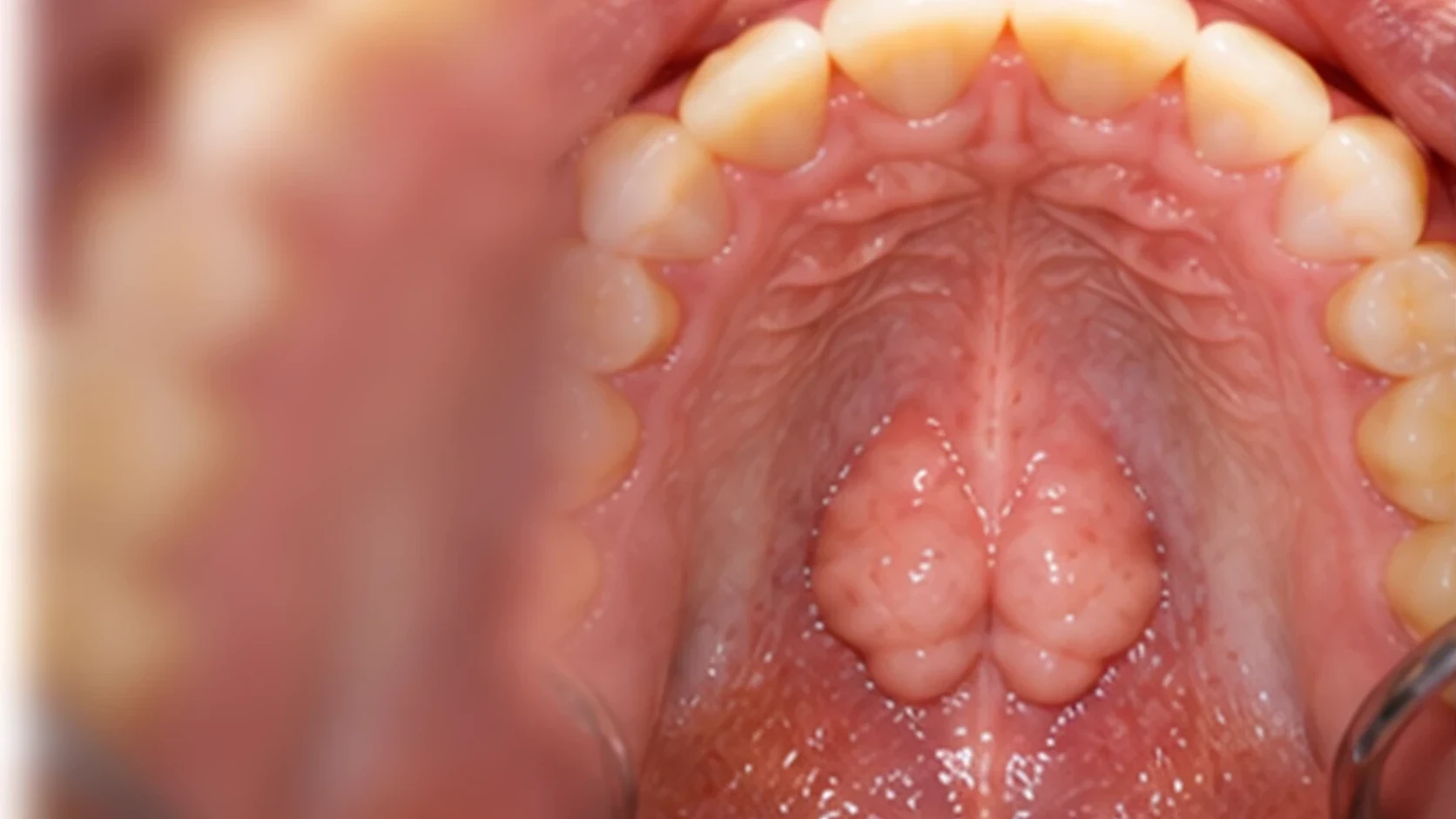
Tori are dense areas of extra bone that usually develop gradually. Common locations include the inside of the lower jaw near the tongue and the midline of the hard palate. They may be discovered during a routine exam or become noticeable when food, dentures, appliances or trauma irritate the thin tissue over them.
The decision to remove a torus should be tied to a specific problem or treatment need, not simply to its appearance.
WHEN REMOVAL MAY MAKE SENSE
Clinical reasons we may discuss tori removal
Denture or appliance interference
Prominent bone can prevent a denture, partial, night appliance or other removable prosthesis from seating comfortably or stably.
Repeated tissue trauma
Thin tissue over a torus may ulcerate repeatedly from food, brushing or other mechanical irritation.
Hygiene difficulty
Some tori create areas that are difficult to clean or that trap food and plaque.
Speech or tongue-space concerns
Large mandibular tori can reduce tongue space or contribute to functional discomfort in selected patients.
Planned restorative treatment
Removal may be needed before specific prosthetic or restorative procedures when the bony contour would interfere with the final result.
Diagnostic uncertainty
If a growth does not have the typical appearance or behavior of a torus, further evaluation or biopsy may be appropriate instead of assuming it is benign.
The best surgery is the one that has a clear reason.
If a torus is stable, painless and not interfering with treatment or function, observation is often the appropriate plan.
BEFORE REMOVAL
How we decide whether surgery is appropriate
We examine the size, location, tissue condition and effect on function or planned dental care. Imaging may be used when it adds useful information about the bony anatomy or nearby structures. We also review medications, health conditions, healing risks and anesthesia or sedation needs.
Atypical findings need a different pathway
- Rapid growth or recent major change
- Soft, ulcerated or irregular tissue that does not heal
- Unexplained numbness or altered sensation
- Persistent pain not explained by local trauma
- A lesion whose diagnosis is uncertain on examination
WHAT SURGERY INVOLVES
A typical tori-removal pathway
01 — Diagnosis & planning
Confirm that the bony prominence is consistent with a torus and that removal has a clear indication.
02 — Anesthesia & access
The area is numbed and the overlying tissue is carefully reflected to expose the bone.
03 — Bone reduction & smoothing
The excess bone is reduced and contoured while protecting nearby soft tissues and structures.
04 — Closure & follow-up
The tissue is repositioned and sutured when needed, followed by postoperative checks as healing progresses.
RECOVERY
Protect the surgical site while soft tissue and bone heal
Expect soreness and swelling
Temporary swelling, tenderness and bruising can occur. Follow the medication and cold-compress instructions given for your case.
Choose foods that protect the site
A softer diet is often recommended early. Avoid sharp, very hot or hard foods that can traumatize healing tissue.
Keep the mouth clean carefully
Oral hygiene remains important, but brushing and rinsing around the surgical area should follow the postoperative instructions.
Call for unexpected changes
Increasing swelling after the expected early period, fever, uncontrolled bleeding, worsening pain or new numbness should be reported promptly.
INSURANCE & FINANCIAL PLANNING
Know the plan before treatment begins.
We accept your insurance and will help you maximize your benefits. Coverage varies by plan, diagnosis and procedure. Our team can review expected fees, available benefits and payment or financing options before treatment begins.
Treatment recommendations are based on clinical need, not on whether a particular service is covered.
CARE CLOSE TO HOME
Choose the Bright Smiles location that works best for you.
Specific provider, technology and appointment availability can be confirmed when you schedule.
Lawrenceville
845 Scenic Hwy S, Suite 300, Lawrenceville, GA 30046
Dawsonville
78 Dawson Village Way N, Suite 170, Dawsonville, GA 30534
START WITH AN EVALUATION
Talk with Bright Smiles about tori removal.
Use the location links to schedule directly. The appropriate treatment is confirmed only after clinical evaluation.
Submitting an online booking request starts the scheduling process; treatment recommendations are made after evaluation.
FREQUENTLY ASKED QUESTIONS
Tori Removal questions patients ask
The right treatment depends on the individual diagnosis and clinical findings.
What are dental tori?
Tori are benign localized overgrowths of bone that commonly form on the palate or along the inside of the lower jaw.
Why do people get tori?
The exact cause is multifactorial and may include genetics, anatomy and functional forces. Their presence does not usually mean something is wrong.
Do tori always get bigger?
Not always. Some remain stable for years, while others change slowly over time.
Can you remove tori with a laser?
Tori are bone, so treatment requires a technique appropriate for bone removal and contouring. Soft-tissue lasers alone do not simply erase the bony growth.
Will I be numb for the procedure?
Local anesthesia is used for surgical comfort. Additional comfort or sedation options depend on the procedure, health history and location.
Can tori be removed before a denture?
Yes, when they interfere with the planned denture or prosthesis. The timing should be coordinated with the restorative plan.
Will the area feel different afterward?
The contour will change and temporary tenderness or altered sensation can occur during healing. Persistent sensory changes should be evaluated.
Can tori come back after removal?
Regrowth can occur, although it is not inevitable. Your dentist can discuss the expected risk for your situation.
How soon can I return to normal food?
That depends on the size and location of surgery and how healing progresses. Follow the diet instructions given at your postoperative visits.
Does insurance cover tori removal?
Coverage depends on the plan and the reason for surgery. We accept your insurance and will help you maximize your benefits.
BRIGHT SMILES DENTISTRY & ORTHODONTICS
If a torus is repeatedly sore, interfering with an appliance or creating another functional problem, we can determine whether observation or surgical removal is the better choice.
Serving Cumming, Lawrenceville and Dawsonville, Georgia.