




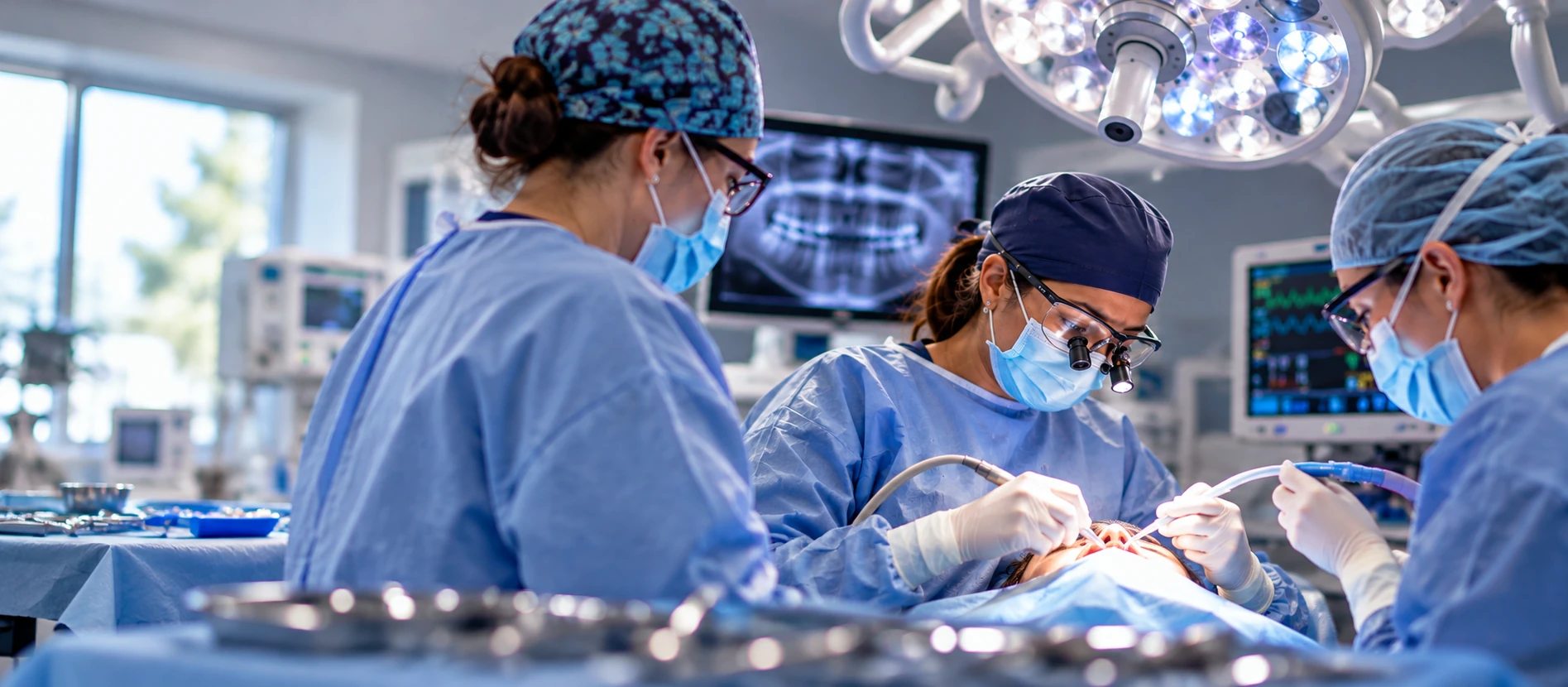
START WITH THE CLINICAL PROBLEM
Oral surgery should solve a defined problem—not simply remove tissue because it is there.
Oral-surgery needs range from removing a tooth that cannot be predictably maintained to managing bone, restrictive tissue, localized growths, implant sites or persistent soft-tissue findings. An examination helps determine whether observation, restorative care, a focused procedure or specialist referral is the appropriate next step.
TOOTH REMOVAL
Tooth Extractions
When a tooth cannot be predictably maintained, extraction may be recommended after the tooth and surrounding structures are evaluated.
THIRD MOLARS
Wisdom Tooth Extractions
Pain, infection, gum inflammation, decay or damage around a wisdom tooth may make removal appropriate after examination and imaging.
URGENT DENTAL CARE
Emergency Tooth Extractions
When severe damage or infection leaves a tooth that cannot be predictably maintained, urgent extraction may be part of the treatment plan.
BONE SUPPORT
Bone Grafting
Bone grafting may be used to preserve or rebuild bone after tooth loss or when additional support is needed for a planned treatment.
IMPLANT PATHWAY
Dental Implant Surgery
Implant treatment can include surgical implant placement and site preparation. Because implant care extends beyond the surgical phase, our dedicated implant hub explains the full treatment pathway.
SOFT TISSUE & BONE
Focused Surgical Procedures
Some localized problems involving bone, a frenum or salivary tissue are best handled with a focused procedure after the diagnosis and treatment goal are clear.
FOCUSED SURGICAL PROCEDURES
Smaller procedures still need a clear diagnosis and a specific reason to treat.
These procedures address localized problems involving bony growths, restrictive tissue beneath the tongue or persistent salivary-tissue swellings. The finding is evaluated first so treatment is matched to the actual clinical problem.
BONY GROWTHS
Tori Removal
When oral tori repeatedly traumatize tissue, trap debris, or interfere with dentures, appliances or planned restorative treatment, removal may be considered.
TONGUE MOBILITY
Lingual Frenectomy
A lingual frenectomy releases restrictive tissue beneath the tongue when a documented functional problem is present and release is clinically appropriate.
SALIVARY TISSUE
Mucocele Removal
A persistent or recurrent mucus-filled swelling may need evaluation and treatment after the diagnosis is confirmed.
EVALUATE FIRST
Not every surgical concern belongs in the same treatment pathway.
Some findings need observation, additional diagnostic work or specialist care rather than an in-office procedure. The first step is determining what the problem is and what level of care it requires.
TISSUE EVALUATION
Persistent or Abnormal Oral Tissue
A sore, lump, color change or other finding that persists or looks unusual should be evaluated. Biopsy or removal may be recommended when the diagnosis requires it.
OTHER LOCALIZED FINDINGS
Other Bony or Soft-Tissue Concerns
Irregular bone, excess tissue or another localized finding may sometimes benefit from a focused surgical procedure. The diagnosis, anatomy and treatment goal determine whether treatment is appropriate.
THE RIGHT LEVEL OF CARE
When Specialist Care Is Better
Major jaw surgery, jaw reconstruction, complex pathology, extensive trauma and other higher-complexity cases are referred to an oral and maxillofacial surgeon or another appropriate specialist.
Surgery is not the goal by itself. The goal is to solve a defined clinical problem with a procedure that is appropriate for the diagnosis.
HOW WE PLAN SURGICAL CARE
Diagnose first. Plan the procedure. Protect healing.
The details change by procedure, but the planning sequence stays consistent.
DIAGNOSIS
Confirm what the problem is
We examine the site, symptoms, tissue behavior and the treatment goal. Imaging or additional evaluation is used when it adds useful information.
PROCEDURE DESIGN
Choose the least extensive appropriate treatment
The surgical approach, anesthesia and timing are matched to the anatomy, diagnosis, medical history and what the procedure needs to accomplish.
RECOVERY
Plan for healing and follow-up
Postoperative instructions, hygiene, diet and follow-up are tailored to the surgical site and the next phase of care.
INSURANCE & FINANCIAL PLANNING
Know the plan before treatment begins.
We accept your insurance and will help you maximize your benefits. Coverage varies by plan, diagnosis and procedure. Our team can review expected fees, available benefits and payment or financing options before treatment begins.
Treatment recommendations are based on clinical need, not on whether a particular service is covered.
CARE CLOSE TO HOME
Choose the Bright Smiles location that works best for you.
Specific provider, technology and appointment availability can be confirmed when you schedule.
Lawrenceville
845 Scenic Hwy S, Suite 300, Lawrenceville, GA 30046
Dawsonville
78 Dawson Village Way N, Suite 170, Dawsonville, GA 30534
START WITH AN EVALUATION
Talk with Bright Smiles about an oral-surgery concern.
Use the location links to schedule directly. The appropriate diagnosis and treatment are confirmed only after clinical evaluation.
Submitting an online booking request starts the scheduling process; treatment recommendations are made after evaluation.
FREQUENTLY ASKED QUESTIONS
Questions about oral-surgery care
These answers are general starting points. The diagnosis, anatomy and treatment goal determine what is appropriate for an individual patient.
Does every bony growth or soft-tissue lesion need surgery?
No. Many findings are observed rather than removed. Surgery is considered when there is a defined clinical reason, the diagnosis is uncertain, symptoms persist, or the finding interferes with function or another treatment.
When might a tooth need to be extracted?
Extraction may be considered when a tooth is too damaged, decayed, infected, fractured, impacted or otherwise cannot be predictably maintained. The recommendation depends on the tooth, surrounding bone and tissue, symptoms and realistic alternatives.
When are oral tori removed?
Tori are usually left alone unless they repeatedly traumatize tissue, complicate hygiene, interfere with dentures or other appliances, or create another clear treatment problem.
What is a lingual frenectomy?
A lingual frenectomy releases a restrictive band of tissue beneath the tongue. Whether it is useful depends on the functional problem, anatomy and clinical evaluation.
What is a mucocele?
A mucocele is a mucus-filled swelling commonly related to a minor salivary gland or duct. Persistent, recurrent or uncertain swellings should be evaluated so the diagnosis and treatment can be confirmed.
Are dental implants part of oral surgery?
Yes. Placing a dental implant is a surgical procedure, and implant treatment may also involve bone grafting or other site preparation. Because the final result also depends on restorative planning, detailed implant information is organized in our Dental Implants pathway.
What type of anesthesia is used?
Comfort planning depends on the procedure, medical history and individual needs. The clinical team reviews the appropriate anesthesia or comfort options before treatment.
Does insurance cover oral surgery?
Coverage depends on the plan, diagnosis and procedure. We accept your insurance and will help you maximize your benefits, and our team can review expected fees and available benefits before treatment.
BRIGHT SMILES DENTISTRY & ORTHODONTICS
Not sure whether an oral-surgery procedure is actually necessary?
Start with an evaluation. We can identify the problem, explain whether treatment is indicated, and discuss the appropriate next step before you make a surgical decision.
Serving Cumming, Lawrenceville and Dawsonville, Georgia.