
bright-smiles-new-logo-final

Root Canals on Baby Teeth

Contact Us

Baby Tooth Root Canals: Protecting Your Child’s Oral Health at Bright Smiles Dentistry & Orthodontics

When dental caries or trauma damage a baby tooth, there’s a possibility that the nerve (or pulp) of the tooth can become affected. This trauma can cause discomfort or sensitivity to hot and cold, and even discomfort when chewing. When this happens, a root canal on the baby tooth may be necessary, and could save the tooth. At Bright Smiles Dentistry & Orthodontics, we perform root canals on baby teeth to preserve your child’s beautiful smile and improve their overall oral health.
A common question from parents is why we would need to do a root canal on a baby tooth, especially since kids will lose baby teeth and those will be replaced by baby teeth. There are many reasons to treat a baby tooth from a growth and dental development perspective. Baby teeth help to:

Maintain Space for Permanent Teeth:

Baby teeth have held a place where permanent teeth come from. When a baby tooth is lost too soon, the teeth next to it can start to move meaning when the permanent tooth does come in it could be misaligned causing orthodontic issues.

Chewing Comfortably:

Baby teeth also play a role in chewing. If a child loses a baby tooth too soon they can have trouble chewing comfortably.

Speech Development:

Baby teeth also help kids learn to clearly speak…if a child is missing some baby teeth it can alter how clearly they speak or articulate words.

Confidence:

Children without baby teeth too early often feel self-conscious about their smiles in front of their friends which can then affect their confidence in social engagements and settings.
When a baby tooth has decayed to the pulp

Reasons to Have a Baby Tooth In Our Case a Tooth Need a Root Canal
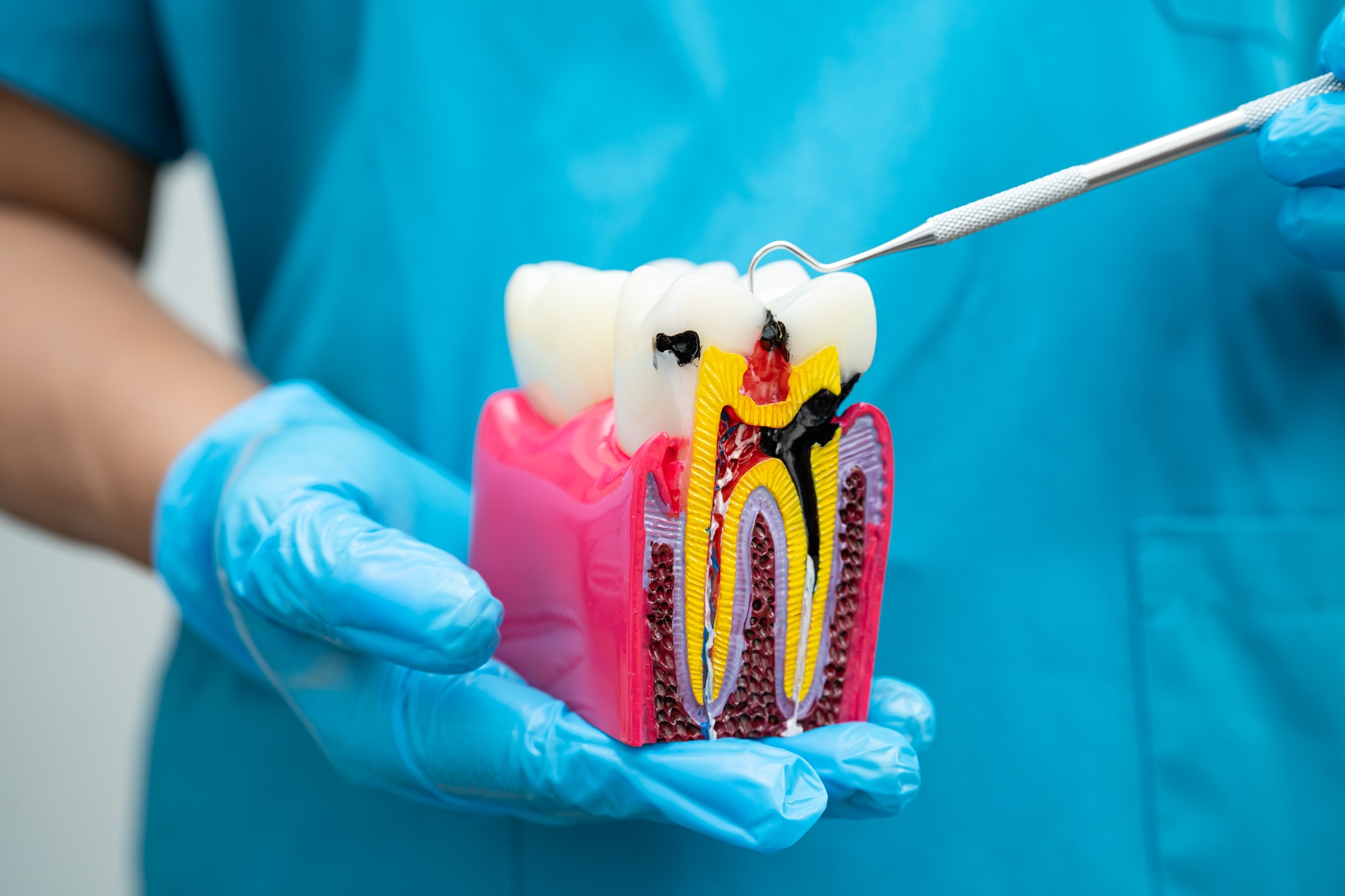
Asian dentist holding dental implant, artificial tooth roots into jaw, root canal

Signs Your Child May Need a Root Canal

If you notice any of the signs below, your child may need a root canal. Managing oral health for children can be difficult and parents are busy! Please pay attention when your child is acting differently or making complaints. Here are some common signs that a baby tooth may need a root canal:
Female child holding hand on the face while feeling pain in the teeth

Sensitivity to Hot or Cold:

When your child is eating or drinking, if they complain of pain or sensitivity hot or cold food, this may indicate that it is the tooth that is damaged in the pulp.

Chronic Pain:

If your child is complaining of consistent tooth pain or discomfort, and is only complaining about one tooth, this may indicate that the tooth pulp is infected or decaying.

Trauma to the Tooth:

If there was an occasion where your child was playing and hit their tooth, or chipped it inadvertently. This trauma could also affect the tooth pulp.

Changes in Eating Habits:

If your child is avoiding food, chewing on one side of their mouth, or they are complaining while chewing. They may have some pain or discomfort stemming from a damaged or infected tooth.

Swelling or Inflammation:

If swelling occurs in or around the tooth or gums, or if you notice a tooth that is discolored, this may be a sign of infection or damage to the nerve. If you experience one or more of these symptoms, please contact Bright Smiles Dentistry & Orthodontics immediately. The earlier we can address the problem, the more damage we can prevent and you have a much better chance of keeping the tooth.

Assessment and Diagnosis:

Before sequencing the root canal procedure, our doctors will assess your child’s tooth, take X-rays to evaluate how much decay or damage it has incurred; this way, the doctors will be able to differentiate how they approach each treatment plan.

Numbing the Area:

First, we will numb the area surrounding the tooth using a local anesthetic. This is so that your child can complete the procedure in comfort and can assure that there is no pain.

Cavitation of infected pulp:

Once the tooth is numb and your child is comfortable, our dentist dose then remove the infected or diseased pulp from inside the tooth. This includes making sure to clean and disinfect the root canals (hollow parts of tooth) to make sure there is no bacteria remaining to avoid creating infection.

Filling the Root Canal:

After diseased tissue is removed, the hollow part of the root chamber will be filled with gutta-percha – a rubber-like substance – to seal the canal and help protect against the development of decay or acts of future infections.

Restoring the Tooth:

To restore the tooth to a functional and aesthetic condition, we may place a small crown or other restoration over the tooth to help protect what is left tooth structure, allowing the tooth to continue to propagate for function until it eventually falls out and is displaced by a permanent tooth.

Baby Tooth Root Canal

The process for a root canal on a baby tooth is essentially the same as the root canal on a permanent tooth, but it is performed based on the young age of the patient and subsequent patient factors. The following is what to expect during the baby tooth root canal procedure.
Root Canal Treatment. Muslim Female Dentist Showing Xray Picture On Digital Monitor
Dentist examining and filling teeth patients in clinic for better dental health and a bright smile.

Why Is It Important to Save A Baby Tooth

Saving the baby tooth, with a rootcanal, is oftentimes safer than simply removing the damaged baby tooth. Not only are dental professionals protecting spacing in your mouth properly, they are working to allow proper speech, chewing and jaw development. Also, the more baby teeth that can be saved, the less likely orthodontic treatment will be needed in the future. If you remove a baby tooth, your teeth are shifting every day, therefore your teeth will shift into improper spaces thus leading to orthodontic treatment to fix it later on.

Aftercare Instructions 

Your child may feel mild sensitivity or discomfort even after the root canal procedure but that should only last for a day or two. The favorable part is, that your child will not feel pain in the treated tooth since the nerve has been removed. We recommend avoiding hard or sticky candy for a few days after the procedure to protect the restored tooth.

Oral hygiene should also be enforced following the procedure to protect the treated tooth and the surrounding teeth. Encourage your child to brush twice a day, floss daily and attend regular check-ups to prevent further dental treatment.

We have to treat this tooth!

Preventing Future Root Canal Procedure

Dentist with face mask checking patient's teeth
The best thing you can do to prevent your children from needing a root canal in the future, is to implement good oral care habits early on.
Here are a few useful steps to help protect all of their teeth from decay:

Encourage them to brush and floss regularly:

Make sure they brush twice a day for two minutes using fluoride toothpaste. And floss once a day to clean off food particles and plaque between the teeth and especially around the gums.

Limit sugary snacks and drinks:

Eating and drinking sugars will hurt your child’s teeth, do your best to limit these items.

Make a plan for regular dentist visits:

Regular dental visits allow us to catch any signs of decay early and provide preventive care to protect your child’s healthy teeth.

Local Pediatric Dental Care Provider

Bright Smiles Dentistry & Orthodontics is focused on your youngest patients. Our doctor and team appreciate the consideration that goes into working with children, and providing a comfortable and positive experience in the office is our priority. We promise to make the root canal procedure go smoothly, and can offer to attempt to save your child’s tooth while making sure their mouth stays germ free.

We are pleased to provide your family that quality full scope of pediatric dental care in Dawsonville, Cumming, Lawrenceville, GA and surrounding areas.


Professional dentistry team preparing for patient consultation
Dentist explaining dental care to male patient using a tooth model. Health consultation,

Schedule Your Child’s Root Canal Consultation Today

If your child is experiencing pain, sensitivity, or discomfort in a tooth, don’t hesitate to contact Bright Smiles Dentistry & Orthodontics to schedule a consultation. Our team is here to provide personalized care to help your child maintain a healthy, beautiful smile.

Call us at (678) 941-5151 or visit our website to book your appointment at one of our convenient locations in Dawsonville, Cumming, or Lawrenceville, GA. Let us help preserve your child’s oral health with expert root canal treatment for baby teeth.

FAQ :

1. Why would my child need a root canal on a baby tooth?
A root canal on a baby tooth is necessary when the tooth has been damaged by decay or trauma that affects the tooth’s nerve or pulp. This procedure can save the tooth, prevent further damage, and help preserve your child’s chewing ability, speech development, and confidence. At Bright Smiles in Cumming, Lawrenceville, and Dawsonville, we use advanced techniques to preserve your child’s tooth.
2. How do I know if my child needs a root canal on a baby tooth?
Signs that your child may need a root canal include pain when eating or drinking, sensitivity to hot or cold, swelling or inflammation, or trauma to the tooth. If you notice these symptoms, contact us immediately at Bright Smiles in Cumming, Lawrenceville, or Dawsonville for an evaluation.
3. What happens during a root canal on a baby tooth?
A root canal involves removing the infected pulp (nerve tissue) from inside the tooth, cleaning and disinfecting the root canal, and then sealing the canal to prevent future infection. In some cases, a crown may be placed on the tooth to restore its function and appearance. The procedure is done under local anesthesia to ensure your child is comfortable throughout.
4. Is it necessary to save a baby tooth with a root canal if it will eventually fall out?
Yes, saving a baby tooth with a root canal is important for maintaining space for permanent teeth, aiding speech development, and ensuring chewing comfort. Saving the tooth can also help prevent future orthodontic issues caused by early tooth loss. At Bright Smiles in Dawsonville, Cumming, and Lawrenceville, we take a conservative approach to preserve your child’s dental health.
5. How long does the root canal procedure take for a baby tooth?
A root canal on a baby tooth usually takes about 30 to 60 minutes, depending on the complexity of the case. The procedure is quick, and your child will be comfortable throughout the process with local anesthesia. Most children are able to return to their normal activities the same day.
6. Are root canals on baby teeth safe for my child?
Yes, root canals on baby teeth are safe and effective. At Bright Smiles Dentistry & Orthodontics, we use the latest technology and gentle techniques to ensure your child’s comfort and safety throughout the procedure. We also provide personalized care to make sure your child has a positive experience.
7. What should I expect after my child’s root canal on a baby tooth?
After the procedure, your child may experience mild sensitivity or discomfort, but this typically subsides within a few days. We recommend avoiding hard or sticky foods for a few days after the procedure to protect the treated tooth. Regular brushing and flossing should be maintained to ensure good oral hygiene.
8. Can a root canal prevent future dental problems in my child’s baby tooth?
Yes! A root canal can help prevent further decay, infection, or tooth loss by treating the problem at its source. By preserving the tooth, you also prevent potential issues with misalignment or other dental complications as your child’s permanent teeth emerge. Our team in Cumming, Lawrenceville, and Dawsonville is here to help preserve your child’s dental health.
9. Is there any special care needed for a child after a root canal on a baby tooth?
After the procedure, we recommend gentle care for the treated tooth, such as avoiding chewy or hard foods for a few days. Maintaining a regular oral hygiene routine and scheduling follow-up visits at our Cumming, Lawrenceville, or Dawsonville offices is important for keeping the tooth and surrounding teeth healthy.
10. How do I schedule a root canal consultation for my child?
You can schedule a consultation by calling Bright Smiles Dentistry & Orthodontics at (678) 941-5151 or by visiting our website to book an appointment at one of our locations in Dawsonville, Cumming, or Lawrenceville. We will evaluate your child’s needs and determine the best course of action to preserve their tooth and oral health.

Why Choose Bright Smiles Dentistry & Orthodontics?

Local Expertise

We know the Cumming, Lawrenceville, and Dawsonville communities and are dedicated to providing exceptional care to our neighbors.

Comprehensive Services

From dental implants to orthodontics and general dentistry, we offer a wide range of services to meet your needs.

Patient-Centered Care

Your comfort and satisfaction are our top priorities. We work closely with each patient to develop a treatment plan that fits their individual needs.

Schedule Your Consultation Today

Ready to transform your smile? Contact Bright Smiles Dentistry & Orthodontics today at (678) 941-5151 to schedule your consultation. With convenient locations in Dawsonville, Cumming, and Lawrenceville, GA, we’re here to help you achieve the smile of your dreams through our comprehensive Cosmetic Dentistry services.

Call Now

Any Questions?

We'll answer your questions and get back to you within 24 hours.

Contact Us

Enter your info and we'll get right back to you.

We'll contact you within 24 hours of your submission.